
Introduction: Why Nonwoven Structure Governs Filtration Performance
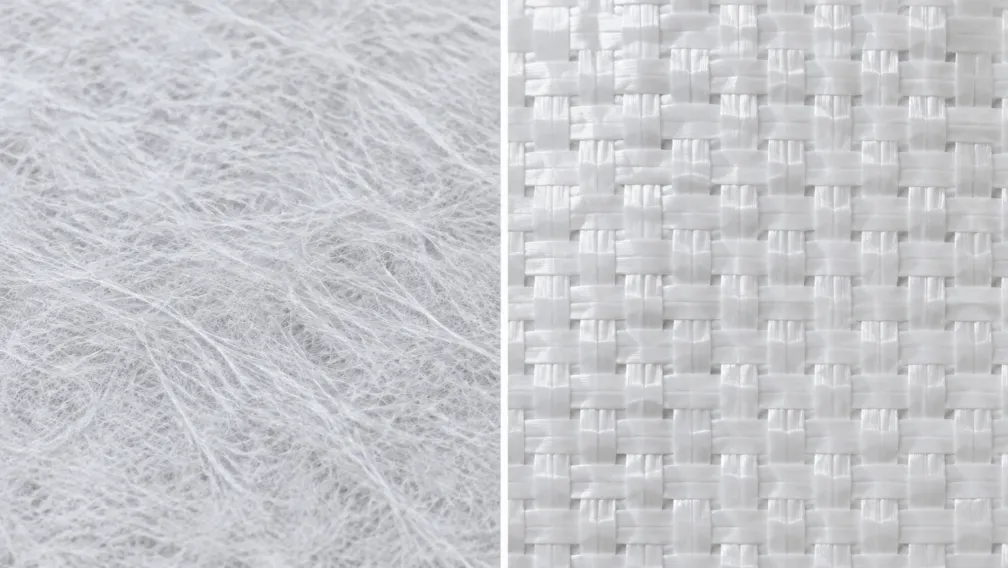
Industrial air handling, automotive intake systems, and liquid process lines depend on filter media that capture fine particulates without imposing excessive energy penalties. Woven wire meshes and monofilament screens rely on surface sieving: particles larger than the aperture stop on the face, rapidly forming a restrictive cake that spikes pressure drop. Nonwoven media operate differently. Because randomly oriented fibers form a three-dimensional porous matrix, particles travel through a tortuous path and are trapped throughout the full thickness of the sheet. This depth-filtration architecture delivers higher dust-holding capacity and lower initial airflow resistance at comparable capture efficiencies. Specifying nonwoven filter fabric requires aligning fiber diameter, web bonding method, polymer chemistry, and electrostatic treatment with the exact fluid medium and target particle size distribution. This guide details the manufacturing routes, capture physics, international rating standards, and procurement parameters used to specify commercial filtration media.
1. Manufacturing Routes and Media Architectures
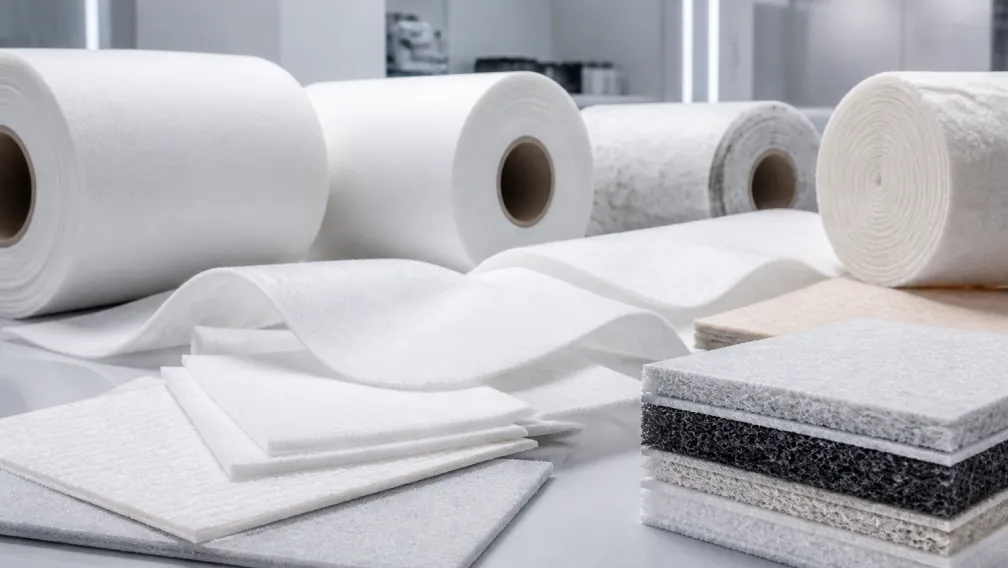
No single web-forming process covers all filtration classes. Fiber diameter, pore size distribution, and mechanical stiffness are fixed during manufacturing, which divides commercial filter media into four primary structural categories.
1.1 Meltblown Nonwoven
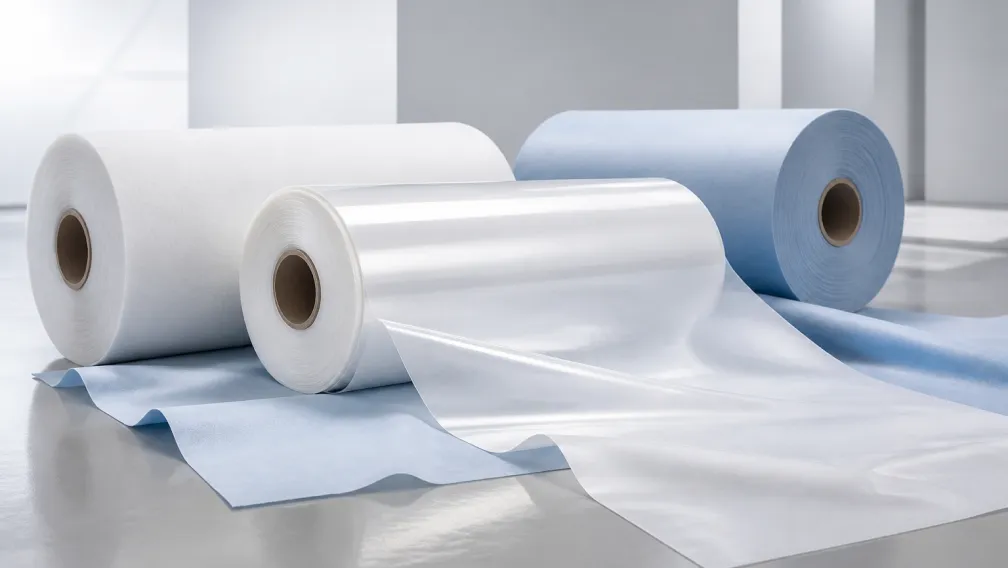
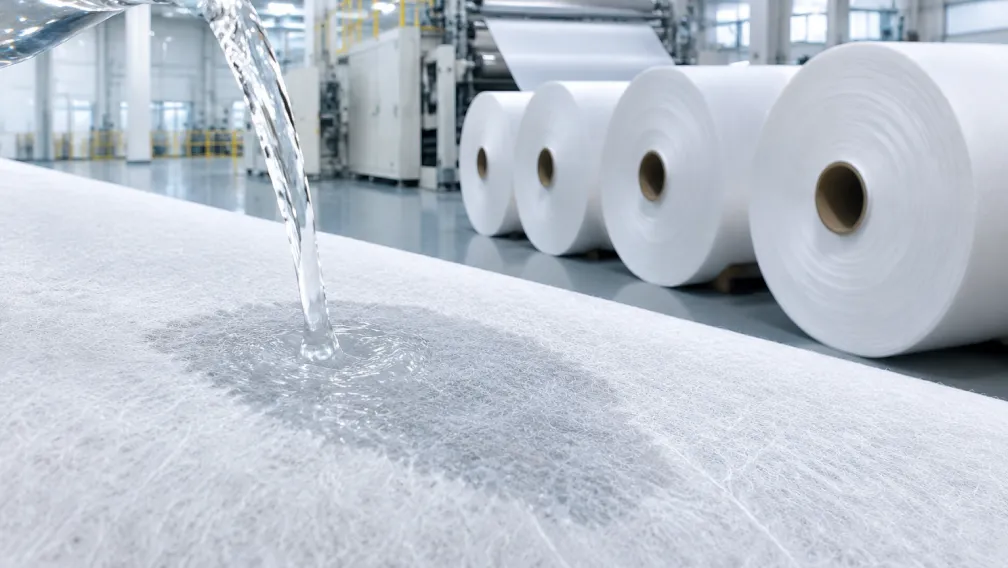
Meltblown media form the active capture layer in fine particulate air filtration and medical respirators. Molten polypropylene is extruded through fine orifices and attenuated by high-velocity hot air streams, drawing the polymer into microfibers typically measuring 1 to 5 microns in diameter. The resulting web contains a high density of sub-10-micron pores and a large specific surface area. Because meltblown fibers are short and lightly self-bonded, the web has low tensile strength on its own and is normally laminated to a stiffer support substrate. A detailed structural breakdown of how these layers interact is covered in our spunbond, meltblown, and SMS nonwoven comparison.
1.2 Spunbond Nonwoven
Spunbond fabrics consist of continuous filaments, generally 15 to 30 microns in diameter, laid randomly onto a moving belt and thermally calendered. In filtration systems, PP non woven fabric produced via spunbond serves three functions: coarse pre-filtration (capturing lint and particles above 10 microns), structural pleat support for fragile meltblown or nanofiber layers, and lightweight liquid strainer bags. Baseline mechanical properties such as tensile strength, elongation, and basis weight uniformity follow the parameters detailed in our PP spunbond technical specifications guide.
1.3 Needle-Punched Felt
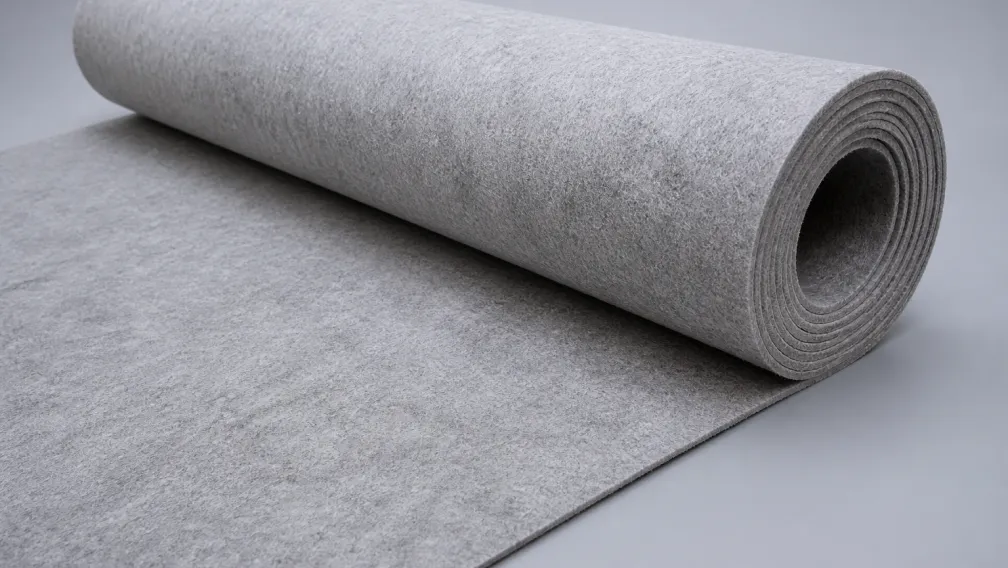
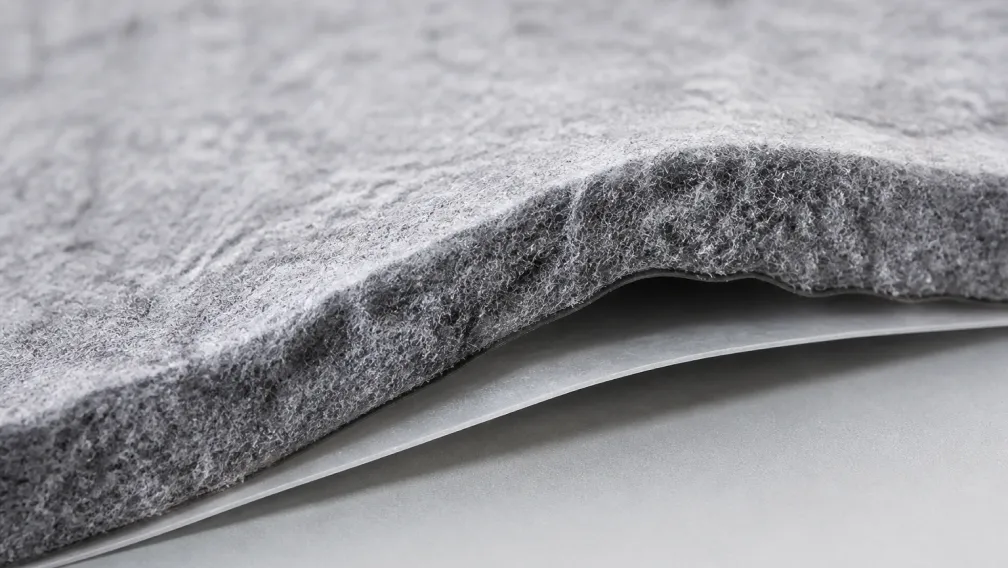
Heavy-duty industrial dust collectors and liquid filter presses rely on needle-punched felts. Crimped staple fibers—commonly polyester, polypropylene, PPS, or meta-aramid—are carded into a thick batt and mechanically entangled by barbed needles, often around an internal woven scrim for dimensional stability. Basis weights range from 200 to 600 gsm. The thick, three-dimensional felt structure withstands reverse-pulse jet cleaning in cement plants, metal foundries, and chemical baghouses where spunbond or meltblown sheets would rupture immediately.
1.4 Composite and Gradient-Density Media
High-efficiency HVAC and automotive cabin filters combine multiple webs into a single laminated sheet. A common construction pairs a coarse upstream pre-filter layer (spunbond or airlaid) with a fine downstream meltblown electret layer and a rigid backing scrim. Larger dust particles are intercepted in the open upstream layer before they can blind the tight downstream pores. Ultrasonic point bonding or sparse hot-melt dot lamination joins the layers while minimizing pore blockage.
2. Mechanical and Electrostatic Filtration Mechanisms
Filter media capture suspended particles through five physical mechanisms. Understanding which mechanism dominates at a given particle size prevents over-specifying dense media that waste fan or pump energy.
- Sieving (Straining). Particles physically larger than the spacing between adjacent fibers are blocked on the upstream surface. Sieving governs coarse liquid strainers and pre-filters handling particulates above 10 to 20 microns.
- Inertial Impaction. As an airstream bends around a fiber, heavier particles (typically above 1 micron) possess too much momentum to follow the curved streamline. They deviate from the flow and collide directly with the fiber surface. Impaction efficiency rises with higher face velocity and smaller fiber diameter.
- Direct Interception. Mid-sized particles (0.3 to 1 micron) follow the gas streamline closely, but if the streamline passes within one particle radius of a fiber, the particle contacts the fiber and adheres via van der Waals forces.
- Brownian Diffusion. Sub-micron particles below 0.1 micron are light enough to be deflected continuously by collisions with gas molecules. This random zigzag motion increases the probability of contacting a fiber. Unlike impaction, diffusion efficiency improves at lower face velocities because residence time inside the web increases.
- Electrostatic Attraction (Electret Media). Between roughly 0.1 and 0.4 microns, neither impaction nor diffusion operates at peak efficiency, creating a minimum-efficiency valley known as the Most Penetrating Particle Size (MPPS, centered near 0.3 microns). Polypropylene meltblown webs can be corona-charged or hydro-charged to embed quasi-permanent dipole charges within the fibers. These electrostatic fields pull both charged and neutral polarizable particles toward the fiber surface, boosting 0.3-micron capture efficiency from roughly 30% to over 95% with zero increase in airflow resistance.
Electret performance carries a practical qualification that procurement teams must account for. Electrostatic charges gradually decay when exposed to high relative humidity, oily aerosols, organic solvent vapors, or elevated temperatures above 70 degrees C. For mission-critical HVAC and cleanroom applications, buyers must verify both the initial efficiency and the discharged mechanical efficiency after isopropyl alcohol (IPA) vapor conditioning.
3. Performance Metrics and International Rating Standards
Evaluating filter media requires standardized laboratory data instead of nominal micron claims. Five core metrics define operational performance across air and liquid systems.
| Performance Metric | Standard Test Method | Engineering Significance |
|---|---|---|
| Fractional Efficiency (%) | ISO 16890 / ASHRAE 52.2 / EN 1822 | Measures particle capture across defined size brackets (0.3 to 10 microns) |
| Initial Pressure Drop (Pa) | EN 779 / ISO 16890 / TSI 8130A | Quantifies airflow resistance at a fixed face velocity (e.g., 5.3 cm/s) |
| Dust Holding Capacity (g/m2) | ASHRAE 52.2 / ISO 16890 | Total standardized test dust captured before reaching final terminal pressure drop |
| Air Permeability (L/m2/s) | ASTM D737 / ISO 9237 | Volume of air passing through a unit area at a fixed differential pressure (125 or 200 Pa) |
| Liquid Micron & Beta Ratio | ISO 16889 / ASTM F795 | Ratio of upstream to downstream particle counts at a given micron size (Beta 1000 = 99.9%) |
3.1 Air Filtration Classifications
In North America, ASHRAE 52.2 assigns HVAC filters a Minimum Efficiency Reporting Value (MERV) from 1 to 16 based on average particle size efficiency across three ranges: E1 (0.3–1.0 micron), E2 (1.0–3.0 microns), and E3 (3.0–10.0 microns). Globally, ISO 16890 has largely replaced EN 779, classifying media by their fractional efficiency against ePM1, ePM2.5, and ePM10 aerosols—explicitly averaging initial and IPA-discharged efficiency so electret decay is reflected in the rating. High-efficiency cleanroom media fall under EN 1822 and ISO 29463, where H13 HEPA media must achieve at least 99.95% capture at the MPPS.
3.2 Liquid Filtration Ratings
Liquid filter bags and cartridges use nominal and absolute micron ratings. A nominal rating typically indicates 80% to 90% retention at the stated particle size, whereas an absolute rating corresponds to 99.9% or higher retention (Beta ratio of 1,000 or greater). Because liquid viscosity is orders of magnitude higher than air, electrostatic charging is ineffective in aqueous or solvent streams; liquid filtration relies strictly on mechanical depth trapping and surface sieving.
4. Polymer Selection for Chemical and Thermal Compatibility
Mechanical capture efficiency is irrelevant if the process fluid swells, hydrolyzes, or melts the fiber web. Selecting the base resin determines service life under thermal and chemical stress.
| Base Polymer | Max Continuous Temp | Chemical Resistance Profile | Primary Filtration Applications |
|---|---|---|---|
| Polypropylene (PP) | 80-90 degrees C | Excellent resistance to strong acids, alkalis, and most solvents; hydrophobic | Meltblown electret air media, chemical liquid filter bags, water pre-filters |
| Polyester (PET) | 130-150 degrees C | High tensile stiffness; good acid resistance; susceptible to hot alkaline hydrolysis | Pleated HVAC support layers, automotive cabin filters, dry dust baghouses |
| Polyamide (Nylon) | 100-110 degrees C | High abrasion and alkali resistance; degraded by strong mineral acids | Alkaline liquid processing, coarse oil and coolant filtration |
| PPS / Meta-Aramid | 190-200 degrees C | Resistant to flue gas acids, thermal oxidation, and steam | Coal-fired boiler baghouses, asphalt plants, waste incineration flue gas |
Polypropylene dominates disposable air and aqueous liquid filtration because it extrudes cleanly into sub-micron meltblown fibers, holds electrostatic charges effectively, and resists biological growth. Polyester is favored when pleating rigidity is critical: a thermally calendered PET spunbond backing holds sharp pleats under high airflow velocities without collapsing or fluttering.
5. Application Mapping Across Air, Liquid, and Civil Systems
Specifying filter media starts from the operating environment and fluid profile. Each industrial sector prioritizes a different balance between capture efficiency, pressure drop, and mechanical durability.
| Application Sector | Typical Media Construction | Target Weight (GSM) | Priority Specification |
|---|---|---|---|
| Commercial HVAC Pleated Filters | PET spunbond + PP meltblown electret | 70-140 gsm | ISO ePM1 / MERV 13 efficiency; pleat stiffness; low pressure drop |
| Automotive Cabin Air Filters | Multi-layer PP electret + activated carbon | 150-350 gsm | PM2.5 capture; VOC adsorption; thermal stability to 85 degrees C |
| Industrial Baghouse Collectors | Needle-punched PET or PPS felt + scrim | 400-550 gsm | Burst strength; pulse-jet fatigue resistance; thermal rating |
| Liquid Filter Bags (Water/Chemical) | Needle-punched PP felt or graded meltblown | 250-500 gsm | Absolute micron rating; weldable seams; zero fiber migration |
| Subsurface Drainage & Soil Filtration | Needle-punched PP staple geotextile | 150-300 gsm | Apparent Opening Size (AOS); water permittivity; CBR puncture |
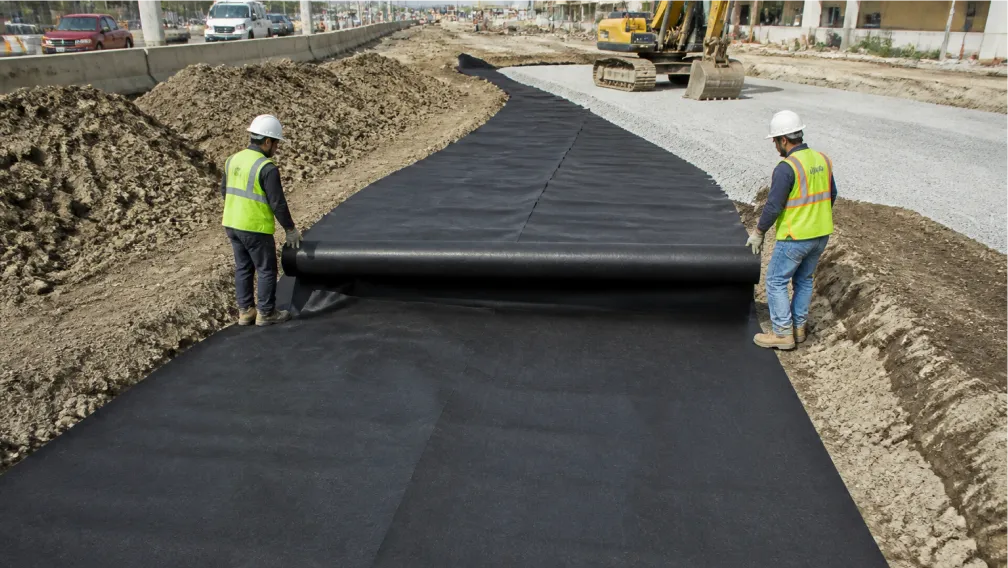
In civil infrastructure, filtration operates at a macroscopic scale: retaining fine silt while allowing groundwater to enter French drains and retaining-wall weep zones without clogging. Those applications require heavy needle-punched nonwoven geotextile fabric rated by Apparent Opening Size (AOS) and hydraulic permittivity.
6. Specification and Sourcing Checklist for B2B Buyers
Procurement errors in filtration media almost always stem from incomplete specifications. Ordering "100 gsm PP filter fabric" without defining face velocity, pressure drop ceiling, or discharging rules leaves wide latitude for substandard lots. A complete B2B purchase specification should lock down six technical groups:
- Target Rating and Test Aerosol. Specify the exact standard (e.g., ISO 16890 ePM1 70% or EN 1822 H13), the challenge aerosol (NaCl solid particles vs. DEHS/paraffin oil droplets), and whether IPA-discharged efficiency must be reported.
- Airflow Resistance Ceiling. Define the maximum allowable initial pressure drop (in Pa) at a stated face velocity (commonly 5.3 cm/s or 10 cm/s). A lower pressure drop directly reduces HVAC fan energy consumption across the filter's service life.
- Basis Weight and Thickness Tolerances. Set allowable lot variance—typically plus or minus 5% on basis weight and plus or minus 8% on caliper—to prevent pleating-machine jams during high-speed converting.
- Pleatability and Stiffness. For pleated panel and V-bank filters, specify Gurley stiffness (mg) or Taber stiffness values so the media maintains open pleat spacing under full fan load.
- Cleanliness and Fiber Migration. For food, beverage, and semiconductor liquid filtration, require thermal singeing or calendaring on the downstream face to prevent loose staple fibers from shedding into the filtrate.
- Roll Converting Parameters. Define exact slit widths, core inner diameter (typically 76 mm / 3 inches), maximum outer roll diameter, and maximum allowable splices per roll. Consistent tension winding on nonwoven fabric rolls is essential for automated pleating and ultrasonic bag-welding lines.
Before approving bulk production, request flat-sheet A4 samples for independent verification on an automated filter tester (such as a TSI 8130A) alongside lot-level test certificates. At our factory, inline basis-weight scanning and batch airflow-resistance checks verify media uniformity prior to slitting and export packing.
Conclusion
Nonwoven filter media perform predictably when the fiber architecture matches the physics of the target contaminant. Meltblown microfibers and electret charging deliver low-resistance sub-micron capture for air systems, spunbond substrates provide structural pleat stability, and heavy needle-punched felts handle high-dust industrial gas and pressurized liquid streams. Defining fractional efficiency, pressure drop ceilings, chemical compatibility, and roll converting tolerances upfront eliminates premature filter blinding and compliance failures in the field.
Specify filter media with verified laboratory data. Avanor Pack supplies spunbond, meltblown, composite, and needle-punched filter rolls tailored to commercial HVAC, automotive, and industrial liquid filtration lines. Submit your target efficiency rating and operating conditions to request flat-sheet test samples and a technical quotation.