
Introduction: The Hidden Layer That Determines Pavement and Drainage Life
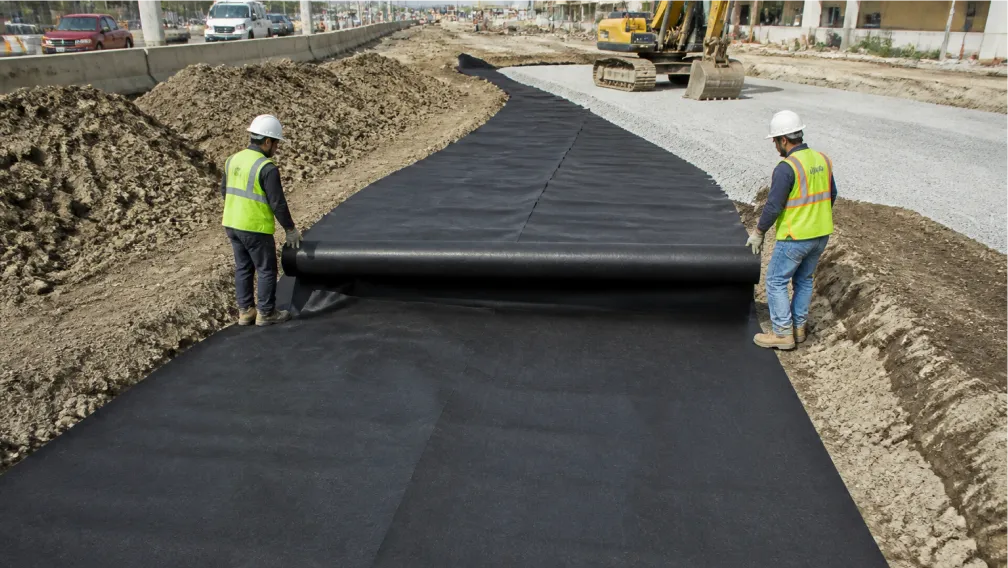
In road construction, drainage systems, and containment engineering, the layer that most often decides long-term performance is one nobody sees after backfilling: the geotextile. When aggregate is placed directly over soft subgrade without a separation fabric, traffic loading pumps fine soil upward into the stone layer and drives aggregate down into the subgrade. The pavement loses structural support within a few seasons, and remediation costs run many times the price of the fabric that would have prevented the failure. Nonwoven geotextiles are the standard engineering answer wherever separation must be combined with water flow, and this guide examines how needle-punched nonwoven geotextile fabric performs the four core functions of separation, filtration, drainage, and protection, which physical parameters specify performance, and how the material is selected against woven alternatives in civil engineering procurement.
1. What a Nonwoven Geotextile Is
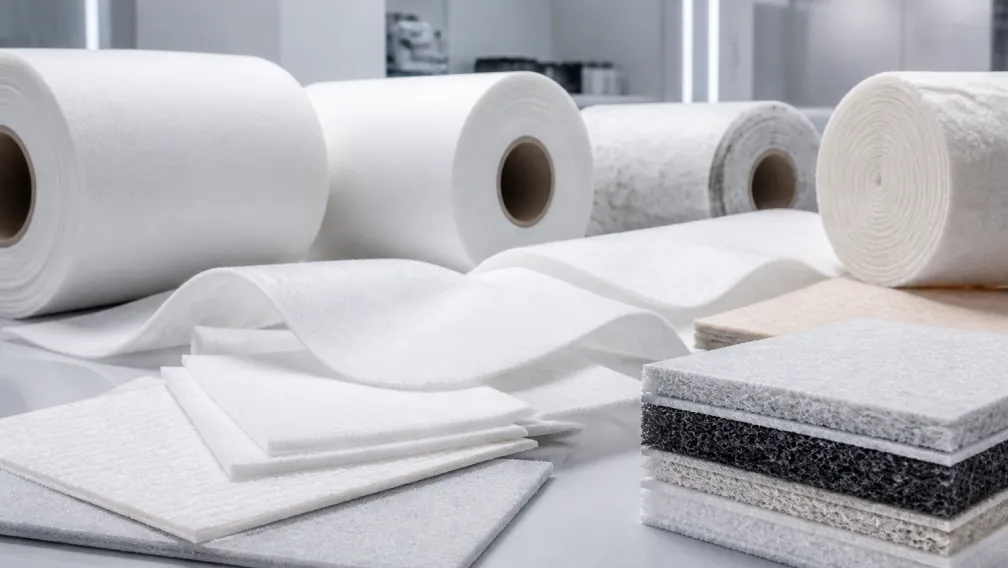
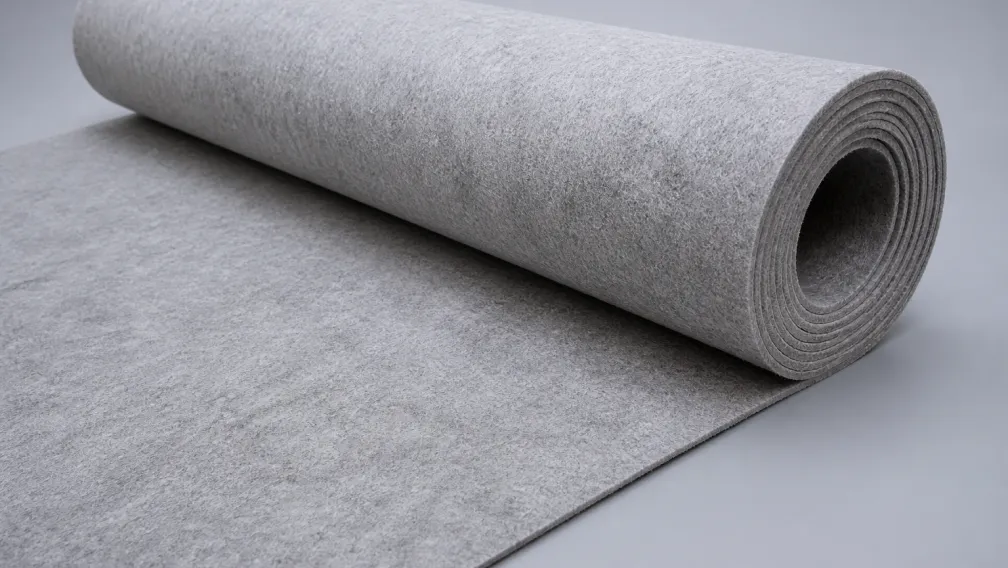
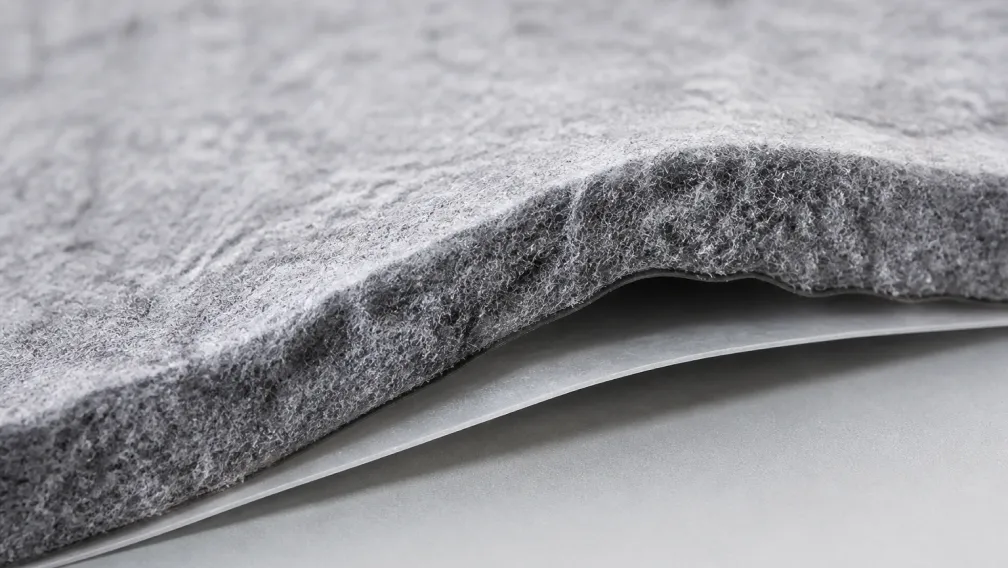
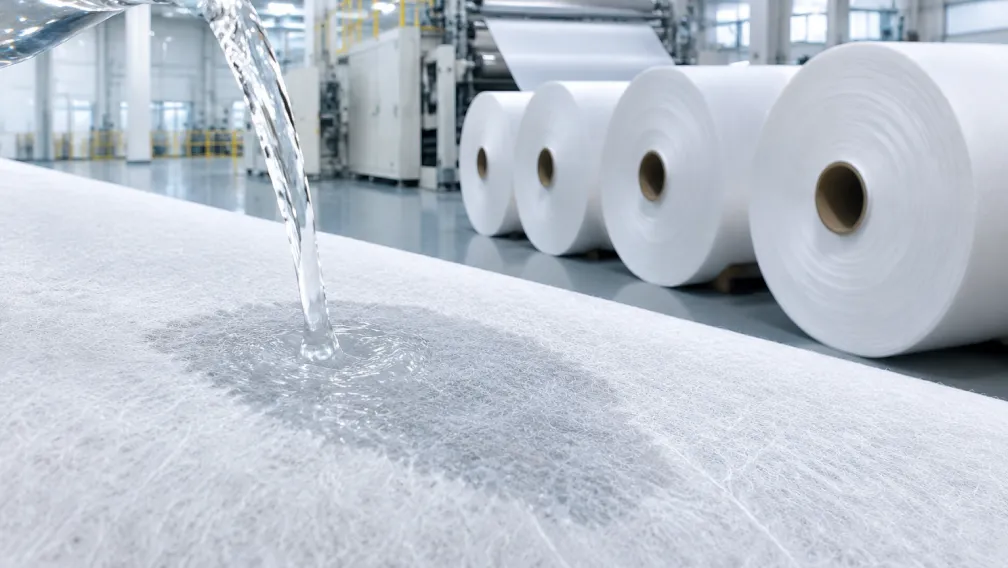
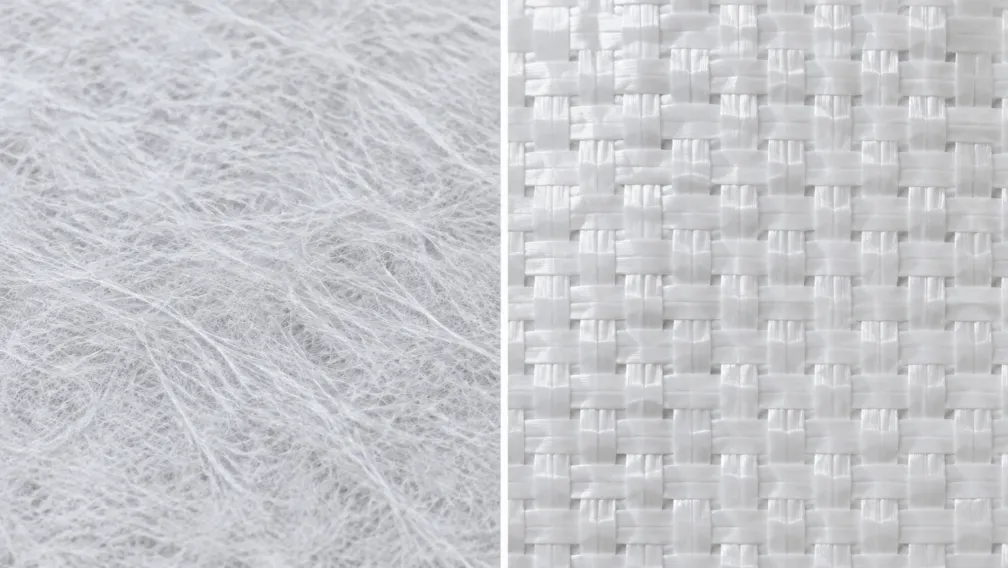
A nonwoven geotextile is a permeable planar textile manufactured from polypropylene or polyester staple fibers that are carded into a random web and mechanically bonded by needle-punching. Thousands of barbed needles pass through the web, entangling the fibers into a three-dimensional matrix with interconnected void spaces. That random, felt-like structure is what distinguishes nonwovens from woven geotextiles, which interlace monofilament or slit-film yarns in a regular grid. The difference in architecture drives the difference in function: woven fabrics deliver high tensile strength at low elongation for reinforcement, while nonwovens deliver multi-directional water flow, high elongation, and conformability to irregular ground. Thermally bonded variants of non-woven fabric material also exist, but needle-punched constructions dominate civil applications because the entangled structure survives installation damage better.
2. The Four Core Engineering Functions
2.1 Separation
Separation keeps two dissimilar soil layers from intermixing under load. Placed between subgrade and aggregate base, the fabric prevents fines from migrating into the stone while allowing the layers to bear on each other uniformly. Unpaved roads, working platforms, and rail ballast are the classic separation duties. The practical result is a reduced aggregate thickness requirement, because the stone layer retains its design depth instead of being consumed by subgrade intrusion.
2.2 Filtration
Filtration means allowing water to pass through the fabric plane while retaining soil particles on the upstream side. The fiber matrix acts as a graded filter: soil forms a natural filter cake against the fabric, and flow stabilizes without piping losses. French drains, trench drains, retaining wall backfill, and riprap underlayment all rely on this mechanism. Filtration performance is governed by the relationship between the fabric's apparent opening size and the particle-size distribution of the retained soil.
2.3 Drainage
Drainage is in-plane flow: the fabric transmits water within its own thickness toward an outlet. Needle-punched nonwovens carry meaningful transmissivity at lighter weights, and thicker needle-punched grades serve as drainage cores behind retaining walls, under plaza decks, and around foundations, often replacing granular drainage layers that are expensive to place in confined excavations.
2.4 Protection
As a protection layer, the geotextile cushions impermeable barriers against puncture and abrasion. Landfill geomembranes, tunnel waterproofing membranes, and pond liners are sandwiched with heavy nonwoven geotextiles that distribute point loads from angular stone and construction traffic. Protection grades run heavy, commonly 400 gsm and above, because mass per unit area correlates directly with the load required to drive a stone point into the membrane.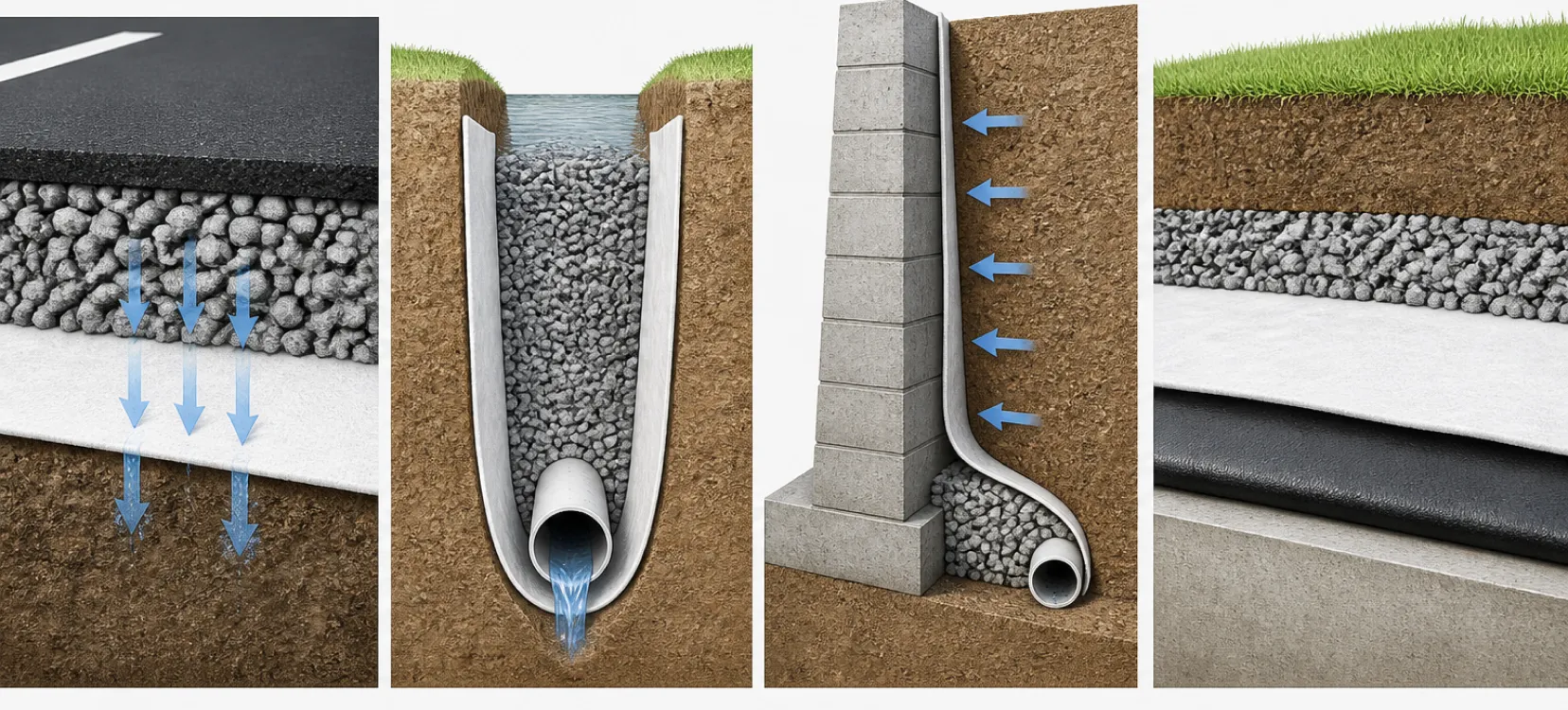
3. The Parameters That Specify Performance
Geotextile procurement is parameter-driven. Generic weight descriptions invite substitution with under-specified material, so purchase documents should fix the testable properties below.
| Parameter | Test Method | Engineering Relevance |
|---|---|---|
| Mass per unit area | ASTM D5261 | General grade indicator; 100-800 gsm commercial range |
| Grab tensile strength | ASTM D4632 | Survivability during installation and under construction loads |
| CBR puncture resistance | ASTM D6241 | Resistance to stone point loads; critical for protection layers |
| Trapezoidal tear | ASTM D4533 | Resistance to tear propagation after installation damage |
| Permittivity | ASTM D4491 | Cross-plane flow capacity for filtration duty |
| Apparent opening size (AOS) | ASTM D4751 | Soil retention criterion; matched to subgrade particle size |
| UV resistance | ASTM D4355 | Allowable exposure window before cover placement |
Two specification rules prevent most field failures. First, survivability comes before hydraulics: a fabric that meets permittivity targets but tears during backfill placement delivers no filtration at all, so minimum strength classes by installation severity govern the baseline. Second, AOS selection is soil-specific: a fabric too open for a fine silty subgrade allows piping, while a fabric too tight for a gap-graded soil risks blinding and loss of flow.
4. Nonwoven vs. Woven: Selecting the Correct Geotextile Class
The two geotextile classes are complementary, and substitution in the wrong direction is a recurring procurement error.
| Selection Factor | Nonwoven (Needle-Punched) | Woven |
|---|---|---|
| Primary strength | Filtration, drainage, separation, protection | Reinforcement, stabilization |
| Tensile behavior | Moderate strength, high elongation (50%+) | High strength, low elongation |
| Water flow | Cross-plane and in-plane | Primarily cross-plane, low transmissivity |
| Conformability | Conforms to irregular subgrade | Stiffer, bridges irregularities |
| Typical duty | Drains, liners, erosion control, separation | Soft-ground stabilization, base reinforcement |
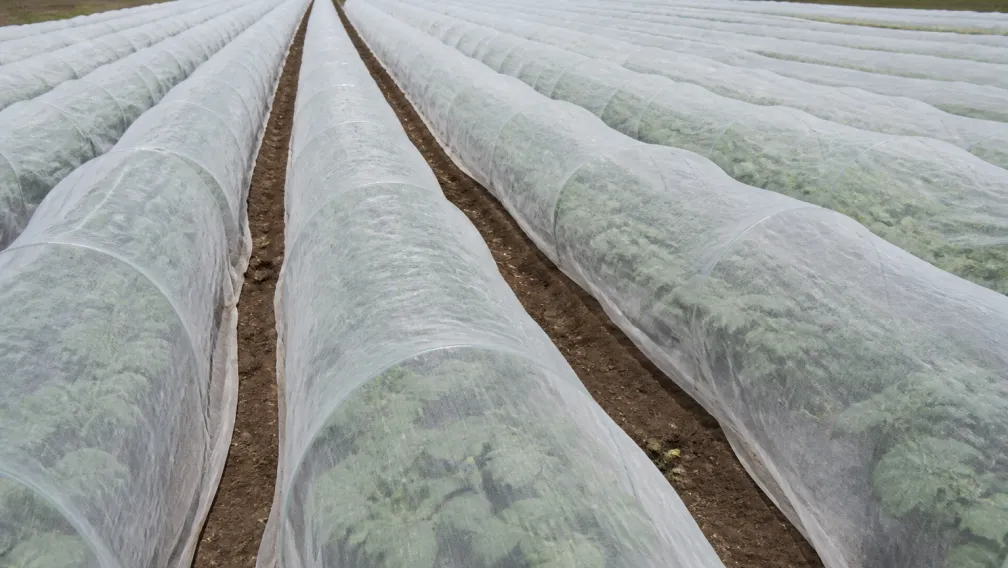
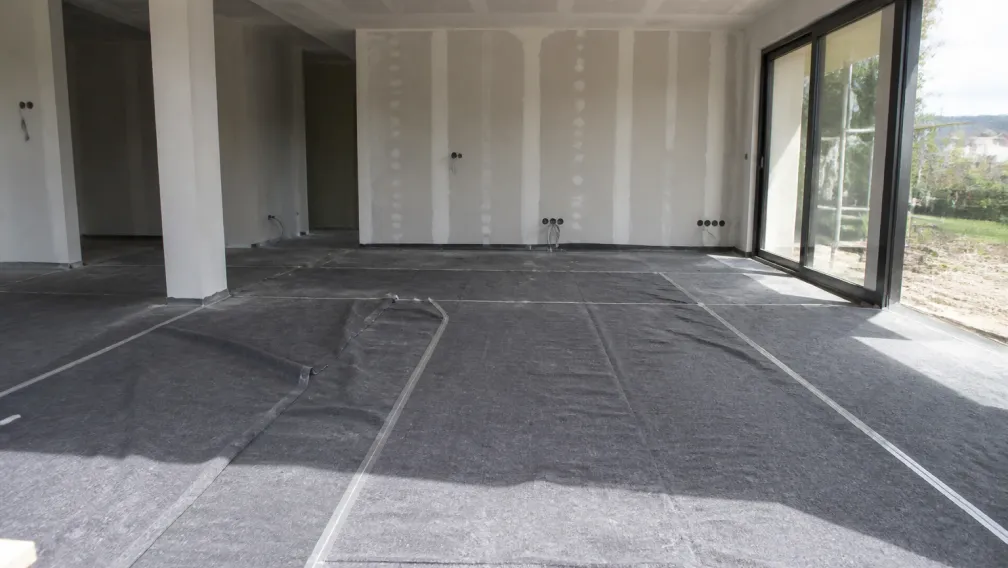
Projects needing both reinforcement and drainage frequently use a woven fabric for stabilization and a separate nonwoven layer for filtration, or a composite geotextile that combines both constructions in one roll. For agricultural separation duties such as access tracks and livestock pads, lighter nonwoven landscape fabric grades apply the same separation principle at lower load classes, and the agronomic side of that product family is covered in our guide to agricultural crop covers and weed barriers.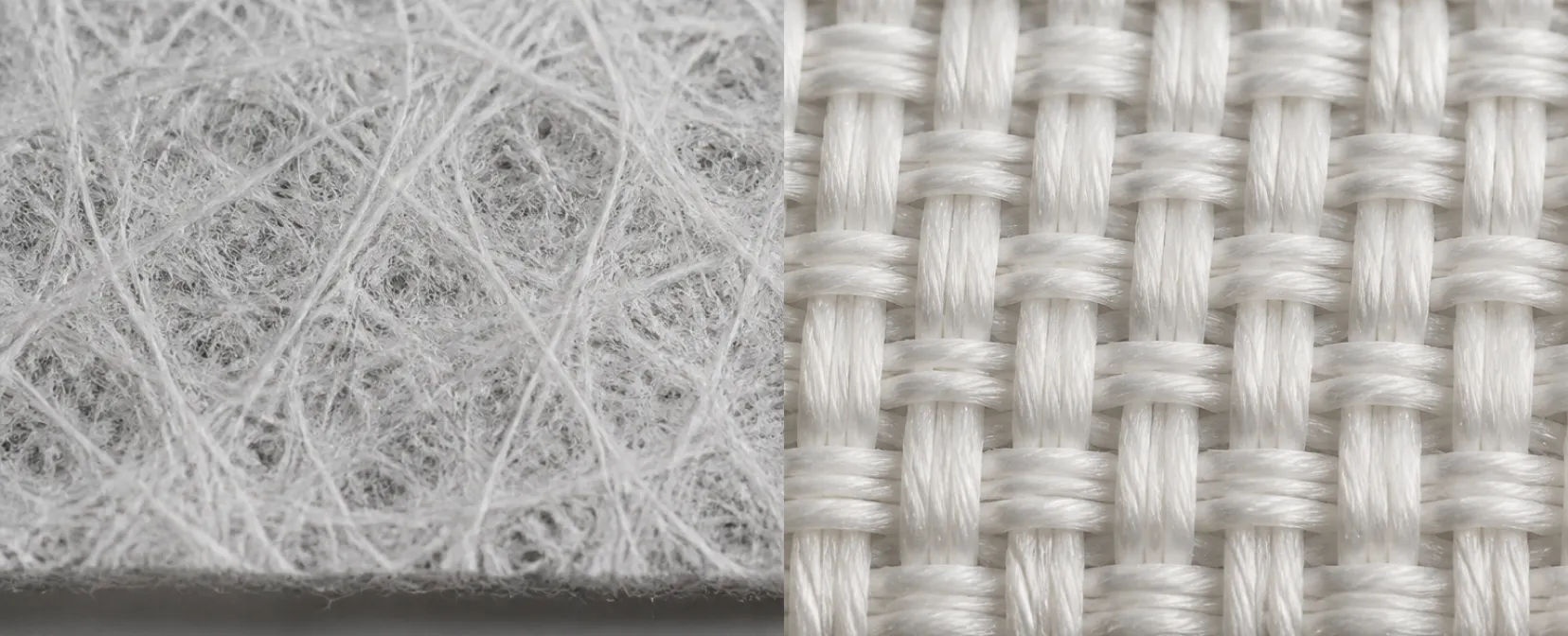
5. Application Duty Mapping
The table below maps common project types to the governing function and the parameter that deserves the closest attention during specification.
| Project Type | Governing Function | Critical Parameter |
|---|---|---|
| Unpaved roads, working platforms | Separation | Grab tensile and tear (installation survivability) |
| French drains, trench drains | Filtration | AOS matched to soil gradation; permittivity |
| Retaining wall backfill | Drainage + filtration | Transmissivity under confining pressure |
| Landfill geomembrane cushion | Protection | CBR puncture; 400+ gsm mass |
| Riprap and shoreline underlayment | Filtration | AOS; UV window before cover |
| Pavement edge drains, plaza decks | Drainage | In-plane flow capacity at design load |
6. Fiber Polymer Selection: PP vs. PET
Polypropylene is the default fiber for buried separation and drainage duty. It is chemically inert across the soil pH range, absorbs no moisture, and floats during handling in wet trenches, which simplifies placement. Polyester carries higher tensile strength at equivalent mass and better creep resistance under sustained load, which suits mechanically stabilized earth and long-term protection layers; its weakness is susceptibility to hydrolysis in high-pH soils above pH 9, such as ground stabilized with lime or cement. The polymer choice therefore follows soil chemistry first and mechanical demand second. Both polymers are available as UV-stabilized grades, but neither should be treated as sunlight-resistant beyond the stated exposure window.
7. Installation and Sourcing Checklist
Field performance depends as much on placement as on specification. Subgrade should be graded smooth and cleared of sharp debris before deployment. Rolls are overlapped, not butted; overlap width scales with subgrade strength, from roughly 300 mm on firm ground to 1 m on very soft ground, with sewn or thermally bonded seams where overlap alone cannot be maintained. Aggregate is placed by end-dumping onto already-placed stone rather than directly onto the fabric, with a minimum initial lift thickness that keeps tracked equipment off the geotextile. Exposure to sunlight is limited to the manufacturer's stated UV window, commonly 14 to 30 days, before cover placement. On the sourcing side, rolls should arrive with lot-traceable labels, and certificates of analysis should report the full parameter set from Section 3 against the stated test methods. Requesting a retained sample from each lot provides the reference material if field performance is ever disputed.
Conclusion
Nonwoven geotextile fabric earns its place in civil works through four measurable functions: separation, filtration, drainage, and protection. Correct specification means fixing mass, strength, puncture, permittivity, and opening size against named test methods, selecting the fabric class against the actual failure mode, and enforcing placement discipline in the field. The material cost is a small fraction of the pavement or drainage system it protects, which makes accurate specification one of the highest-leverage decisions in earthworks procurement.
Specify geotextiles with full test documentation. Avanor Pack supplies needle-punched PP and PET nonwoven geotextiles from 100 to 800 gsm with lot-level certificates covering tensile, puncture, permittivity, and AOS data. Send your project specification or application conditions for grade recommendations, roll samples, and a quotation.