
Introduction to Supply Chain Consolidation in Industrial Textiles
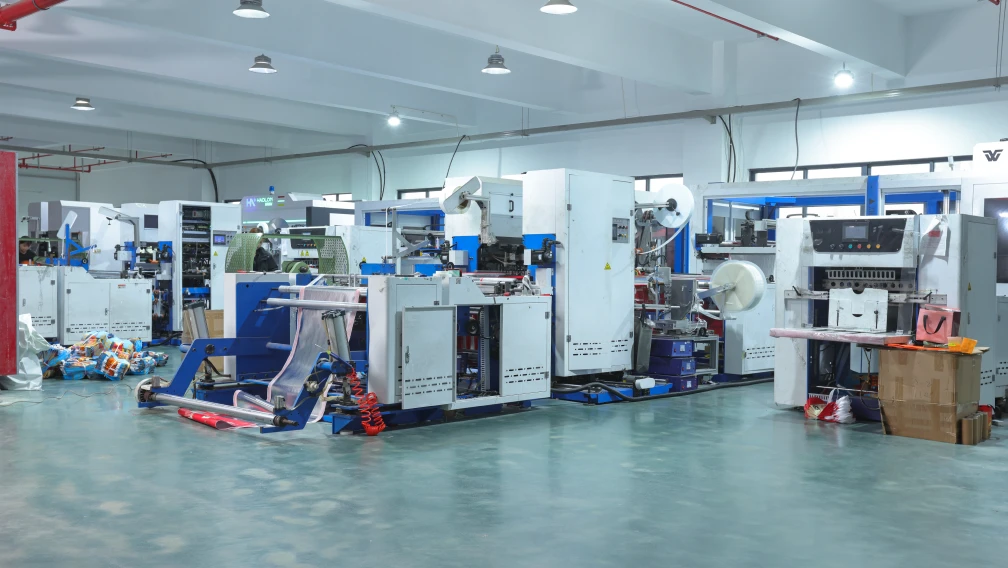
The global procurement of nonwoven packaging and commercial textiles is highly sensitive to supply chain stability and material consistency. Fragmented production paradigms, which involve extruding polymer in one geographical location, executing surface printing at a secondary facility, and finalizing the converting process at a third, introduce exponential risks for quality degradation and project delays. Vertical integration consolidates these disparate phases into a singular, continuous engineering environment. This technical analysis examines the mechanical processes, exact quality control thresholds, and operational efficiencies inherent to a vertically integrated nonwoven manufacturing facility engineered for high-volume, standardized output.
1. Raw Polymer Extrusion and Web Consolidation Mechanics
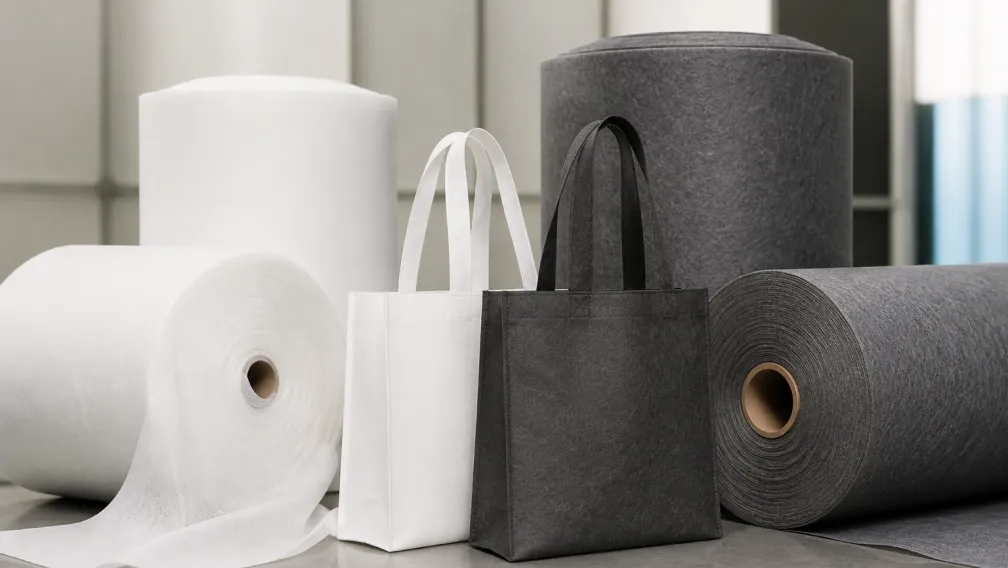
The manufacturing lifecycle initiates strictly at the molecular level. Procuring standardized virgin isotactic polypropylene (PP) resin pellets ensures a predictable Melt Flow Index (MFI) and structural baseline. In a centralized, vertically integrated facility, the entire extrusion phase operates under continuous thermodynamic monitoring. The molten PP resin is forced through precision gear pumps into massive spinnerets to form continuous micro-filaments. These filaments immediately undergo high-velocity aerodynamic drafting before entering the thermal calendering phase.
1.1 Inline Statistical Process Control (SPC)
Factory-level Statistical Process Control (SPC) utilizes advanced inline beta-ray and laser sensors to monitor the fabric web continuously. These high-frequency sensors detect micro-variations in the basis weight (Grams per Square Meter, or GSM) across the transverse direction of the master roll. If the GSM deviates beyond the strict ±5% tolerance threshold required for commercial applications, the automated closed-loop feedback system instantaneously adjusts the polymer extrusion gear pumps or modulates the drafting air velocity. This rigorous, automated extrusion control eliminates the fundamental structural flaws frequently found in open-market roll stock, guaranteeing uniform multi-directional tensile strength for downstream converting machinery.
2. Surface Energy Modification and 7-Color Gravure Printing Calibration
Transferring high-fidelity corporate graphics onto a highly porous, hydrophobic substrate like PP spunbond requires precise surface engineering prior to ink application. Unmodified polypropylene exhibits low surface tension, rendering it incompatible with standard industrial printing inks.
2.1 Corona Discharge Treatment
Prior to entering the primary printing press, the nonwoven web is subjected to intense corona treatment. This process utilizes a high-voltage, high-frequency electrical discharge to oxidize the top microscopic layer of the polymer, significantly raising its surface energy (measured in dynes). Without precise corona calibration, subsequent ink adhesion fails completely, leading to immediate graphic delamination and peeling during standard field use. The integrated nature of the facility allows the corona intensity to be adjusted in real-time based on the specific GSM and density of the extruded batch.
2.2 Gravure Cylinder Engineering and Tension Control
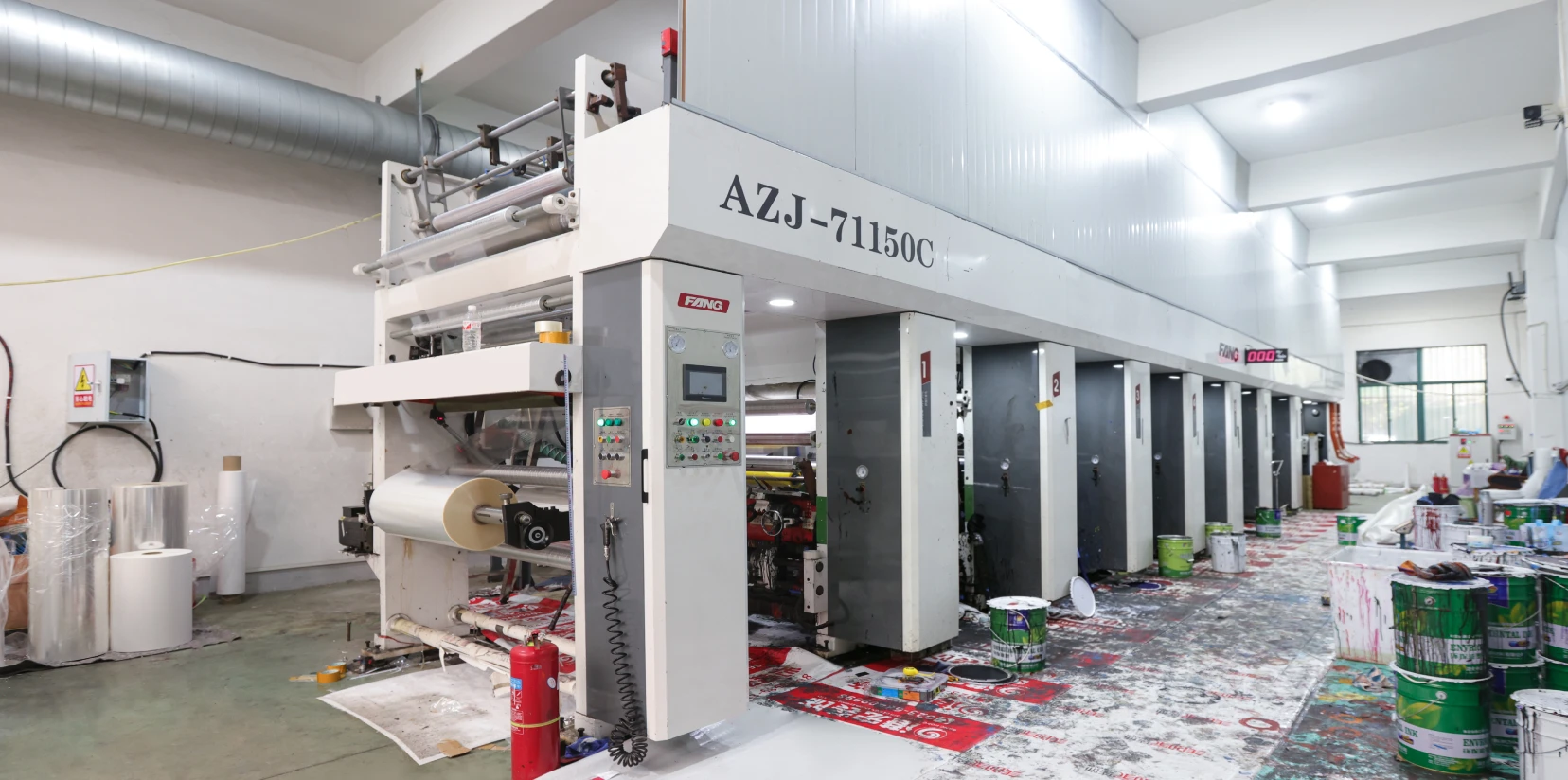
Following surface energy modification, the continuous web enters the 7-color gravure printing line. Industrial gravure technology utilizes photochemically engraved heavy steel cylinders. Each specific cylinder corresponds to a highly precise Pantone color match. The primary engineering challenge in nonwoven gravure printing involves web tension control. Because nonwoven fabric possesses inherent physical elasticity, excessive mechanical tension during the printing sequence will stretch the web. This stretching causes severe chromatic registration errors, where the separate color layers misalign, creating a blurred or ghosted image. Advanced integrated facilities employ automated closed-loop tension controllers and ultrasonic edge-guiding systems to maintain sub-millimeter registration accuracy at continuous operational speeds exceeding 100 meters per minute.
3. Thermal Lamination Protocols for Enhanced Structural Integrity
For demanding B2B applications requiring absolute liquid barriers or extreme structural rigidity—such as heavy-duty retail totes or commercial floor protection films—the printed web undergoes a secondary thermal lamination process. A precise, thin layer of polyethylene (PE) or biaxially oriented polypropylene (BOPP) film is extruded in a molten state directly onto the nonwoven substrate.
3.1 Adhesion Metrics and Nip Roller Calibration
The critical factory performance metric during the lamination phase is bond strength, empirically tested via standardized peel adhesion protocols. Insufficient thermal energy or incorrect pneumatic pressure applied at the lamination nip rollers results in trapped microscopic air pockets and subsequent rapid delamination under sheer stress. Executing the lamination process within the same continuous facility as the gravure printing allows process engineers to exactly match the thermal adhesive characteristics of the extrusion coating with the specific chemical profile of the inks utilized in the immediately preceding step. This synchronization is virtually impossible in a fragmented supply chain.
4. High-Speed Converting Dynamics: Ultrasonic Welding vs. Mechanical Stitching
The mechanical transformation of two-dimensional laminated roll stock into three-dimensional functional products is defined as converting. Vertically integrated factories utilize a dual-track converting strategy, selecting the methodology strictly based on the empirical load-bearing requirements of the client's final product.
4.1 Automated Ultrasonic Consolidation
For high-volume, standardized retail bags and lightweight commercial covers, automated ultrasonic sealing provides optimal throughput and cost-efficiency. Highly calibrated acoustic horns generate severe high-frequency vibrations (typically operating between 20 kHz and 40 kHz). These vibrations create localized friction heat exclusively within the targeted polymer fibers, melting and fusing the nonwoven layers together instantly. This generates a continuous, hermetic seal without requiring external consumables such as heavy thread or chemical adhesives. Factory-level calibration of the precise ultrasonic amplitude and designated weld time is absolutely critical to prevent material "burn-through," which instantly compromises the seam's structural integrity under load.
4.2 Heavy-Duty Mechanical Stitching for Dynamic Loads
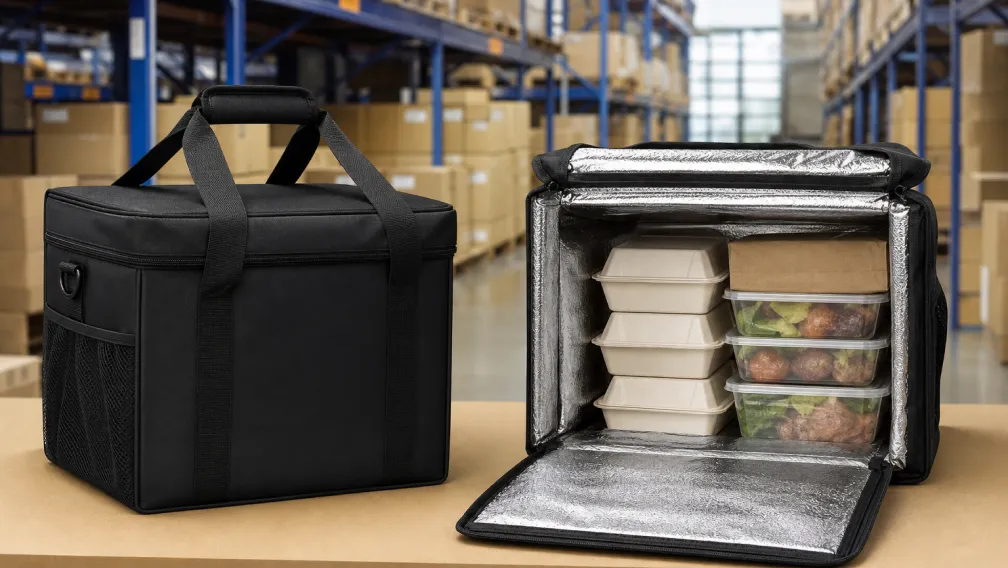
Applications subjected to extreme dynamic stress—including commercial catering thermal delivery bags, heavy-duty agricultural sacks, and industrial hardware transport totes—require traditional mechanical cross-stitching. Industrial multi-needle sewing machines reinforce all physical stress points with specific X-box stitch patterns utilizing heavy-denier polyester or nylon thread. While this process is significantly more labor-intensive and slower than automated ultrasonic welding, physical thread binding offers unmatched shear strength and long-term tear resistance. Senior factory engineers mandate the converting methodology strictly based on the maximum tensile load requirements specified within the technical documentation provided by the B2B client.
5. Quality Management Systems (QMS) and Destructive Testing Protocols
Maintaining a consistent daily operational output exceeding hundreds of thousands of units necessitates a highly rigorous, standardized Quality Management System. In a vertically integrated engineering environment, quality control transitions from reactive end-of-line visual sorting to proactive, inline defect prevention.
5.1 Standardized Operating Procedures (SOPs) and Laboratory Verification
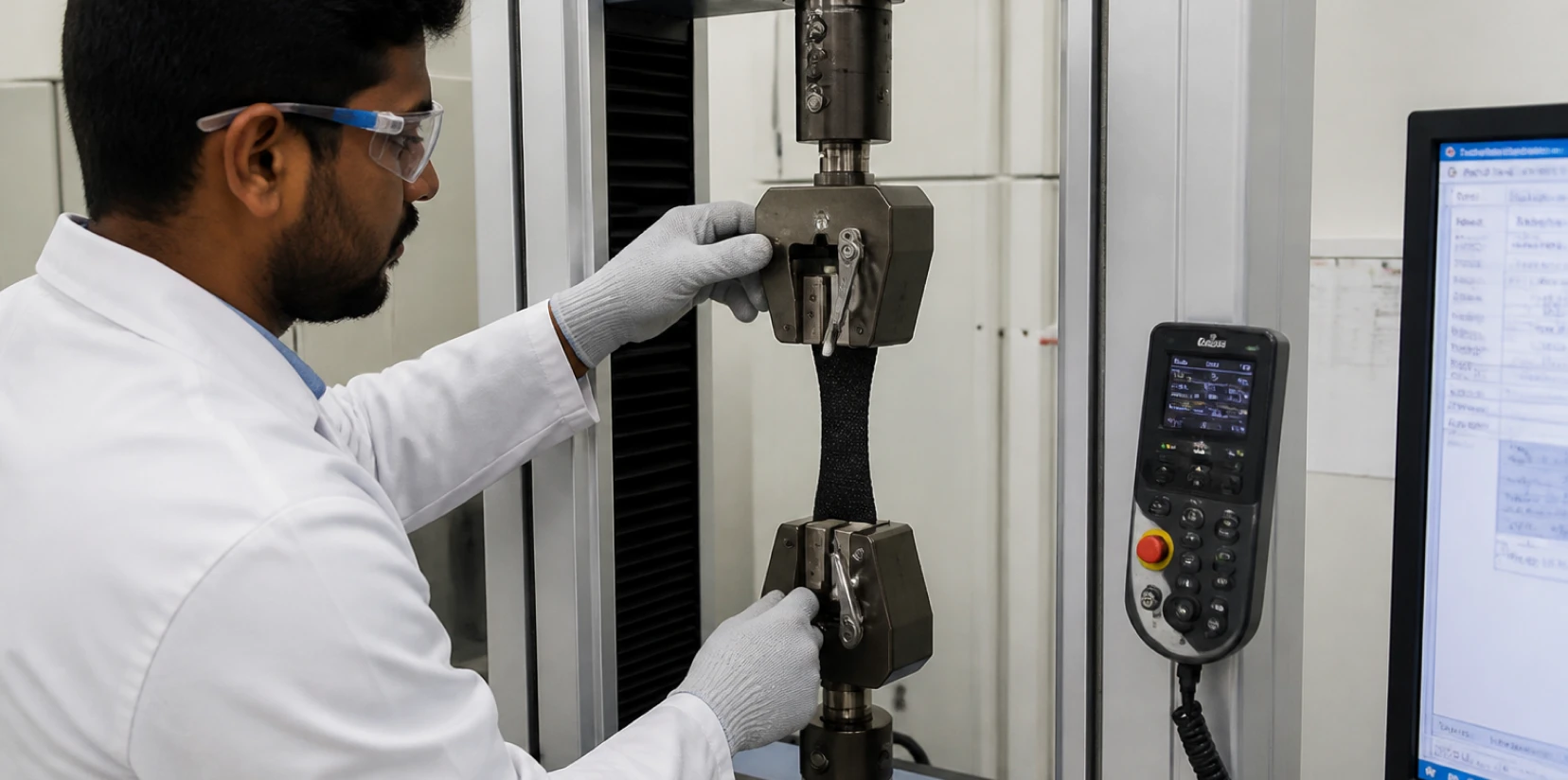
Standardized Operating Procedures (SOPs) dictate mandatory hourly physical testing protocols across all production sectors. Shift engineers routinely extract random material samples directly from the active production line to conduct laboratory-grade evaluations. These include precise grab tensile tests (utilizing ASTM D5034 standards), hydrostatic head tests to verify liquid barrier integrity, seam burst strength evaluations, and colorimetric spectrophotometer readings to ensure zero chromatic deviation from the client's approved physical master sample. Any recorded metric anomaly triggers an immediate automated line halt and a mandatory root-cause engineering analysis, permanently preventing the mass production and subsequent shipment of non-conforming goods.
6. Supply Chain Economics and Raw Material Lead Time Compression
From an enterprise procurement perspective, a supplier's internal manufacturing architecture directly dictates the B2B buyer's own operational agility and market responsiveness. Fragmented textile suppliers operate on a vulnerable push-model, remaining heavily reliant on purchasing pre-manufactured, pre-colored roll stock from independent textile mills. If a highly specific color, unique GSM, or specialized chemical treatment is unavailable in the localized open market, all downstream production stalls indefinitely.
6.1 The Pull-Model Advantage of Raw Resin Storage
Conversely, a vertically integrated manufacturing facility operates on a highly efficient pull-model. Operational capital is aggressively invested in bulk silo storage of virgin PP resin pellets rather than warehoused finished textiles. When a massive commercial order is initiated by a client, the factory dynamically extrudes the exact required fabric GSM, applies the precise chemical masterbatch color, executes the custom gravure printing, and mechanically converts the units in a continuous, uninterrupted sequence. This raw-material-to-finished-product capability effectively compresses procurement lead times by several weeks, thoroughly insulates the B2B client from regional textile shortages, and provides absolute auditable transparency regarding material origin, chemical composition, and regulatory safety compliance.
Conclusion
Navigating the complex global procurement landscape for commercial nonwovens requires rigorously assessing a manufacturing partner's core engineering infrastructure. Vertical integration is not merely a logistical convenience; it represents a fundamental engineering requirement for executing strict statistical process control, ensuring high-fidelity gravure printing, and guaranteeing the exact structural integrity of the final converted product. By consolidating initial polymer extrusion, advanced surface engineering, and high-speed mechanical converting within a singular, strictly governed Quality Management System, enterprise buyers definitively mitigate supply chain risks and ensure continuous, uncompromising compliance with their most demanding technical specifications.