
Introduction: The Garment Cover Is a Product, Not an Afterthought
For dry cleaning chains, bridal boutiques, apparel brands, and costume departments, the garment bag is handled at the exact moment the customer evaluates quality—at pickup, at delivery, at unboxing. A garment that arrives dusty, creased, or smelling of plastic reflects on the business that supplied the cover, whatever happened to the garment itself. Yet garment bags are commonly bought as a commodity: a length, a color, a price. This guide treats the nonwoven garment bag as the engineered product it is, covering the storage science that dictates material choice, the sizing and gusset logic that prevents damage, and the construction details that separate a two-season bag from a two-month one.
1. The Storage Science: Why Plastic Fails
The starting point for any garment bag specification is understanding why the default—the thin polyethylene dry cleaning bag—damages the garments it covers. Three mechanisms are documented:
- Phenolic yellowing: polyethylene film is commonly manufactured with BHT (butylated hydroxytoluene), an antioxidant that reacts with airborne nitrogen oxides and moisture to form yellow pigments. Those pigments transfer directly to fabric, with white and light garments showing the damage first. Textile testing authorities including James Heal document the reaction, and the staining is frequently permanent.
- Moisture entrapment: plastic film is impermeable. Residual solvent moisture from the cleaning process, ambient humidity, and the fiber's own moisture regulation all condense inside the sealed bag, producing mildew, musty odor, and progressive fiber weakening. The dry cleaning process is not actually dry—solvents and steam finishing leave moisture that plastic locks in.
- Static dust attraction: plastic film builds static charge that actively pulls airborne dust onto the garment surface, the opposite of the intended protection.
Textile conservators are unambiguous on the conclusion: dry cleaning bags are transport packaging, to be removed on arrival. Museums storing historic textiles use breathable covers exclusively. Any garment storage program built on plastic film is accumulating damage invisibly—customers discover it at the worst possible moment, when they open the bag to wear the garment.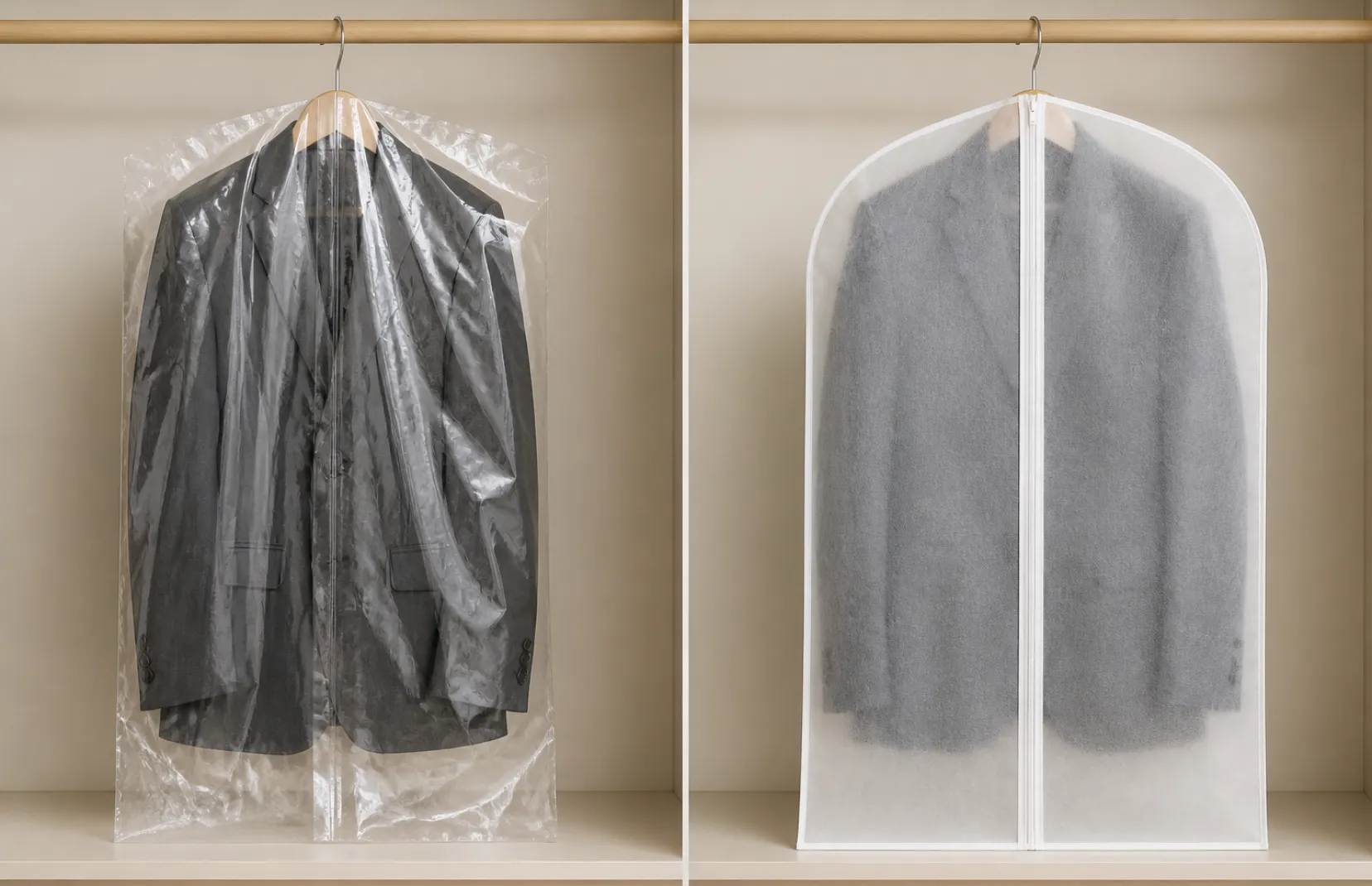
2. Material Selection: Nonwoven PP, PEVA, or Cotton
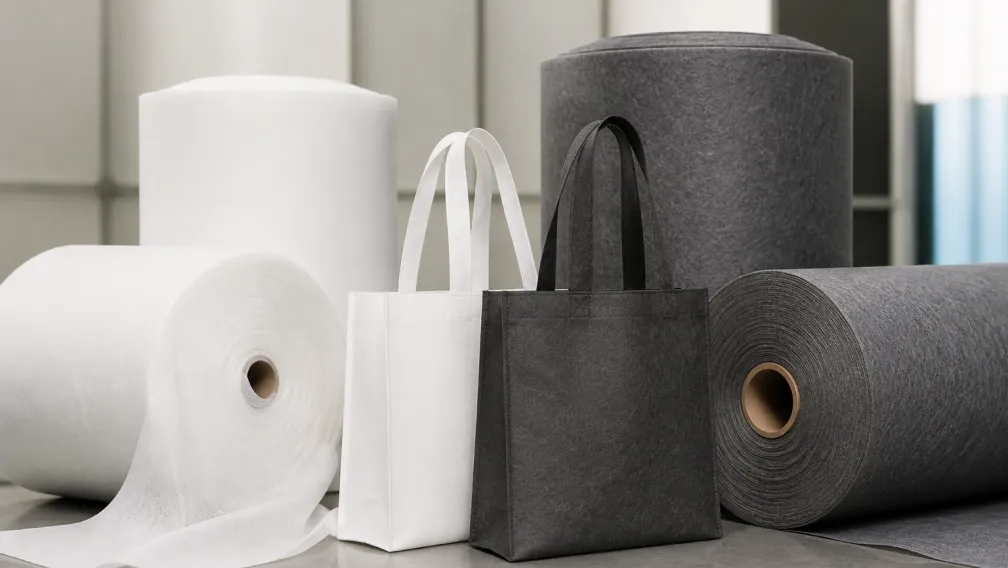
Three material families dominate the garment bag market, and each owns a different duty:
| Factor | Nonwoven PP | PEVA / Vinyl Film | Cotton Muslin |
|---|---|---|---|
| Breathability | Good; porous filament web passes air and moisture vapor | Poor; impermeable film traps humidity | Excellent |
| Dust and pest barrier | Good | Good while intact; cracks with age | Good |
| Water resistance | Moderate; sheds light exposure | High | Low |
| Durability | High tear resistance at low weight; 100gsm class resists ripping | Embrittles and cracks over time | Very high; washable, decades of service |
| Printability | Excellent; silkscreen and gravure branding | Limited | Moderate |
| Unit cost at volume | Low | Low | High |
| Correct duty | Retail covers, dry cleaning pickup programs, travel, seasonal-to-multi-year storage | Short transit, wet-weather protection | Archival, multi-decade preservation |
The honest positioning matters here. Nonwoven PP at 80–120gsm is the correct specification for the commercial mainstream: it breathes well enough for seasonal and multi-year storage, survives handling and travel, accepts branding cleanly, and prices for volume distribution. For genuine archival duty—a gown intended to be preserved for decades—unbleached, undyed cotton muslin remains the museum-grade answer, and serious bridal programs should say so rather than oversell. PEVA and vinyl belong to short transit duty only; as storage they reproduce the plastic failure modes above.
Material choice also determines which of the three storage threats a bag actually addresses. Light is the least discussed: prolonged exposure fades dyes and weakens fibers, so an opaque cover outperforms a transparent one for anything stored longer than a season, whatever the material. Dust is handled by any intact cover but defeated by static-prone films. Pests—clothes moths above all—are stopped by a fully zipped closure acting as a physical barrier, which works only if the garment was clean when stored: moth eggs are laid on body oils and food residue, and a sealed bag over a soiled garment incubates the problem it was meant to prevent. Professional cleaning before storage, a breathable cover, and a dry climate-controlled space remain the three-part answer that no bag alone replaces.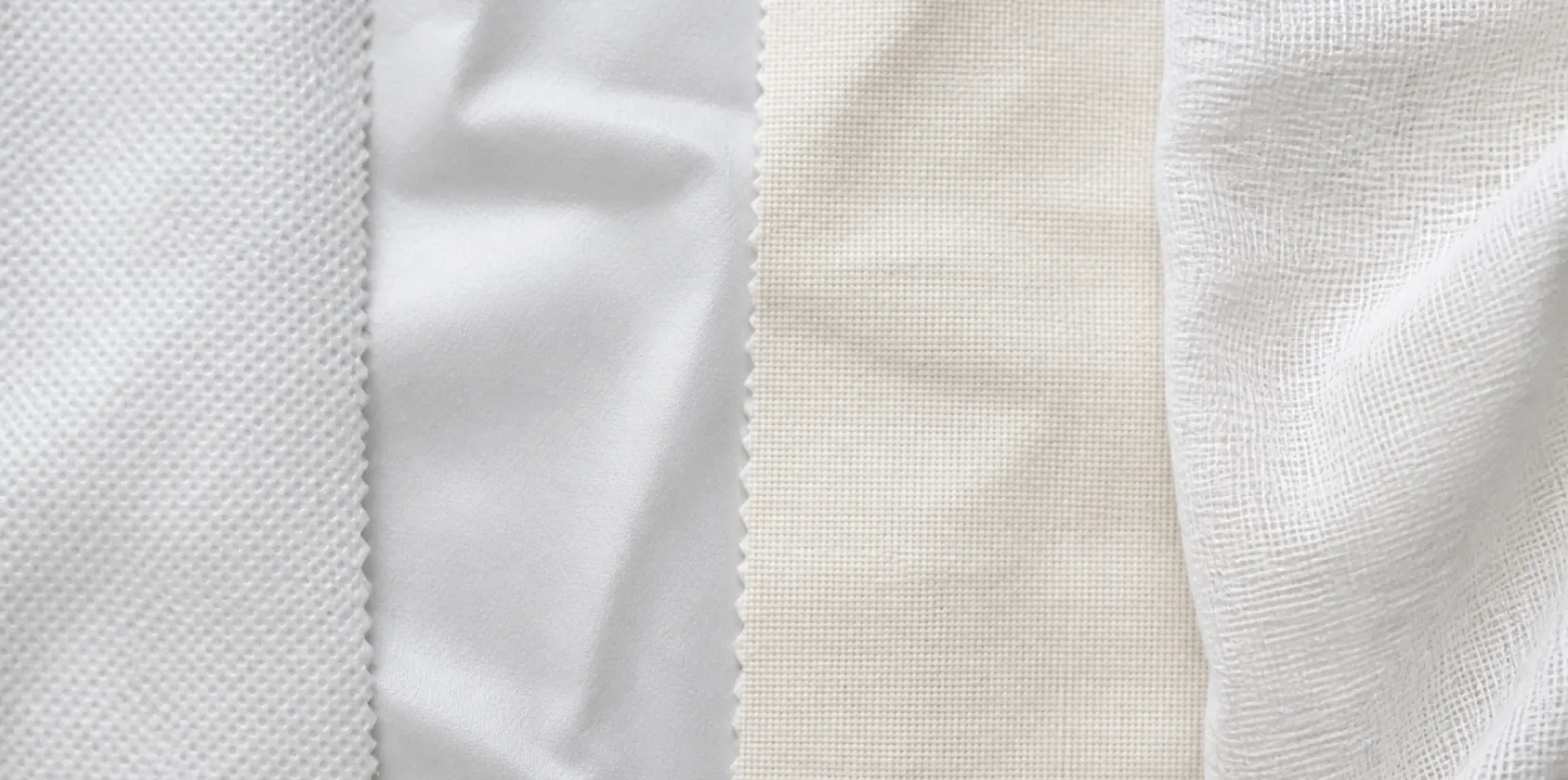
3. Sizing and Gusset Logic
Length and gusset are the two dimensions that decide whether a bag protects or damages. The working table:
| Garment Class | Length | Gusset | Notes |
|---|---|---|---|
| Shirts, blouses, jackets | 40 in | Flat | Economy format; no volume items |
| Suits, coats, knee-length dresses | 54 in | Flat to 3–4 in | The dry cleaning and menswear standard |
| Long dresses, evening wear | 60–63 in | 3–4 in | Window recommended for identification |
| Gowns, full-length formal wear | 72 in | 8–10 in | Prevents compression creasing of skirts |
| Ball gowns, bridal volume | 72 in | 10–20 in | Anything less crushes tulle and crinoline into set wrinkles |
The gusset is the dimension buyers most often omit and most regret. A flat bag on a voluminous gown compresses the skirt into deep wrinkles that steaming cannot fully release; the 10–20 inch gusset is what allows the garment to hang at natural volume. Opaque fabric with a full-length zipper is the bridal standard for a second reason: it keeps the gown unseen until the day. Travel formats add a metal grommet at the fold point and carry handles, allowing a 72-inch bag to fold to briefcase dimensions.
4. Construction Details That Decide Service Life
Garment bags fail at predictable points. The specification items that address them:
- Zipper: full-length, center-front, nylon coil in #3 or #5 gauge. Coil zippers survive the flexing that kills molded-tooth zippers. Bottom-up closing on gown bags prevents the slider catching delicate fabric.
- Hanger opening: the highest-stress point on the bag. A reinforced, near-sealed opening keeps dust out while accepting the hanger hook; an unreinforced slit tears within weeks under a heavy coat.
- Clear window: welded PVC or vinyl panel for content identification in retail and wardrobe inventory. Window edges should be welded or bound, not raw-cut, to prevent cracking.
- Seam construction: bound or overlocked seams on the bag body; the bottom seam carries the garment's resting weight in transit.
- Accessories: ID card pocket for dry cleaning and wardrobe routing, accessory pockets for belts and jewelry, grommet and handles for folding travel formats.
5. Branding and Program Design for B2B Buyers
A garment bag circulates. It hangs in the customer's closet for months, travels to events, and reappears at every pickup—which makes it one of the highest-frequency brand impressions a service business owns. Silkscreen printing on nonwoven handles one-to-four-color logos cleanly, and printed bag programs scale from boutique runs to chain-wide rollouts. Program models worth considering:
- Dry cleaning conversion: replacing single-use poly with a branded reusable cover sold or issued at first pickup removes the yellowing liability entirely, cuts consumable spend, and turns every closet into signage. Several operators run deposit or loyalty models around the reusable cover.
- Bridal retail: opaque gusseted bags with boutique branding, sized to the gown classes the shop actually sells, with the 72-inch/10-inch-plus format reserved for ball gowns.
- Wardrobe and costume departments: heavy-duty covers in standardized lengths with ID windows and routing pockets, bought in bulk for production inventory.
For the broader specification workflow—artwork formats, sampling, and verification—the process mirrors our custom bag specification framework.
6. What to Verify Before a Bulk Order
Garment bags are simple products, and pre-commitment verification is correspondingly fast:
- Fabric weight: confirm actual GSM against the quote on a cut swatch; underweight fabric is the standard cost-cut in this category.
- Zipper cycling: open and close the sample fifty times; snagging or tooth separation at this stage predicts field returns.
- Hanger opening: load the sample with a heavy coat and hang for a week; check for tear initiation at the opening.
- Window weld: flex the window panel repeatedly; cracking at the weld line indicates wrong film grade or weld temperature.
- Size tolerance: measure length, width, and gusset on five samples from the run; ±10mm is a reasonable production tolerance to write into the PO.
Conclusion
Garment bag procurement starts from the storage science—breathable, BHT-free, moisture-passing construction—and proceeds through material selection, length and gusset sizing, and the construction details that determine service life. Nonwoven PP covers the commercial mainstream of this specification at volume economics, with cotton muslin reserved for genuine archival duty. Send us your garment classes, volumes, and branding requirements, and our team will return a written specification with samples. Contact our team to scope your program.