
Introduction: Polymer Substrates in Transit Asset Engineering
In commercial packaging and transit asset procurement, the base polymer substrate dictates the mechanical and barrier limits of the final product. Polypropylene (PP) dominates the reusable packaging sector, but the exact method of fiber extrusion fundamentally alters its physical properties. Procurement engineers must differentiate between spunbond, meltblown, and composite SMS (Spunbond-Meltblown-Spunbond) architectures to avoid catastrophic field failures. This technical guide analyzes the extrusion mechanics, tensile properties, hydrostatic resistance, and specific commercial applications for these three primary nonwoven substrates, providing a rigid framework for standardizing B2B packaging specifications.
1. Spunbond Polypropylene (SS): The Structural Baseline
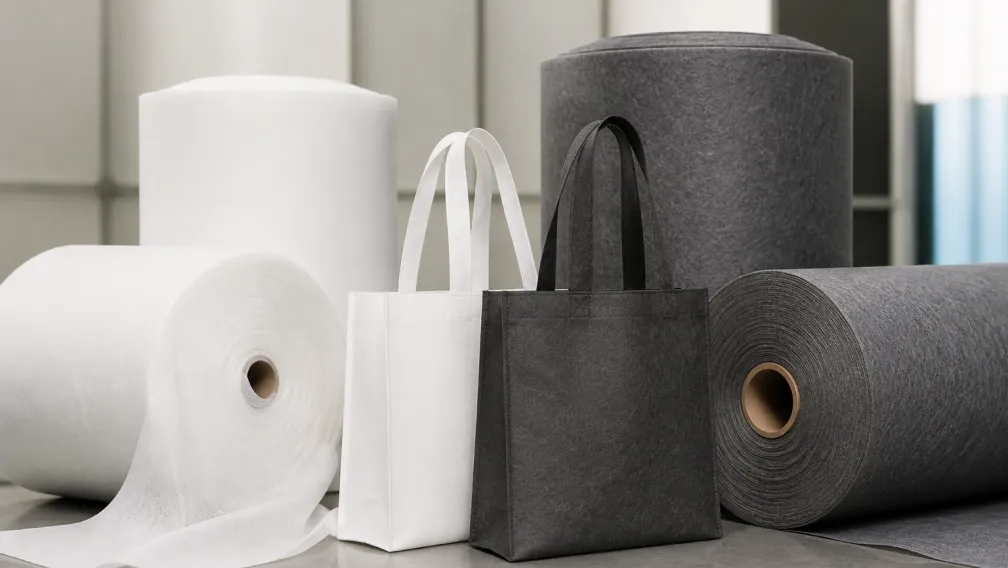
Spunbond nonwoven manufacturing involves melting virgin thermoplastic polypropylene resin and extruding it through precision spinnerets. The resulting continuous filaments are aerodynamically attenuated (stretched) and randomly deposited onto a moving collection belt. These filaments, typically measuring 15 to 35 microns in diameter, form an unbonded web.
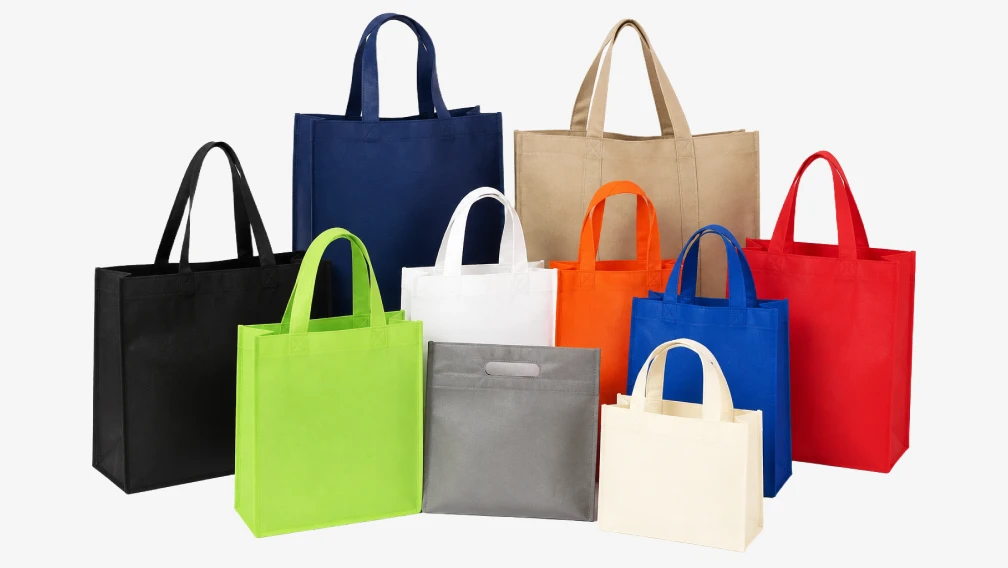
The web immediately passes through heated calender rolls, which apply strict pressure and temperature to fuse the overlapping fibers at specific points. This thermal point-bonding creates an isotropic matrix, distributing tensile forces across both the machine direction (MD) and cross direction (CD). Spunbond fabric provides high mechanical strength, excellent abrasion resistance, and high air permeability. Due to its rapid extrusion speed and high tensile yield per gram of polymer, it serves as the definitive structural baseline for nonwoven bags in grocery distribution, retail logistics, and promotional marketing.
2. Meltblown Architecture: The Microfiber Barrier
The meltblown process utilizes identical PP resin but applies distinct extrusion physics. As the polymer exits the spinneret, high-velocity hot air streams intersect the extrusion path. This forced air blasts the polymer into ultra-fine, discontinuous microfibers, typically ranging from 1 to 5 microns in diameter. These microfibers are blown onto a collector screen, creating a dense, opaque web with an exceptionally high surface area.
This dense microfiber matrix yields extreme filtration capabilities and high hydrostatic resistance, effectively blocking fine particulates and liquid droplets. However, the discontinuous nature of the microfibers results in exceptionally low tensile strength and negligible abrasion resistance. A pure meltblown fabric will easily tear under standard mechanical stress, rendering it entirely unsuitable as a standalone material for load-bearing retail packaging.
3. The SMS Composite Matrix (Spunbond-Meltblown-Spunbond)
To harness the barrier properties of meltblown fibers without sacrificing structural integrity, material engineers developed the SMS composite matrix. This architecture sandwiches a central layer of meltblown microfibers between two outer layers of spunbond filaments. The three layers are thermally laminated together during a continuous online extrusion process.
The exterior spunbond layers absorb physical abrasion and provide the high tensile strength required for carrying payloads. The internal meltblown core functions as an absolute physical barrier against fluids, bacterial penetration, and fine dust. This composite is the mandatory specification for medical transit bags, sterile instrument packaging, hazardous material transport, and agricultural covers where both structural load capacity and biological isolation are critical operational requirements.
4. Tensile Strength and Load-Bearing Dynamics
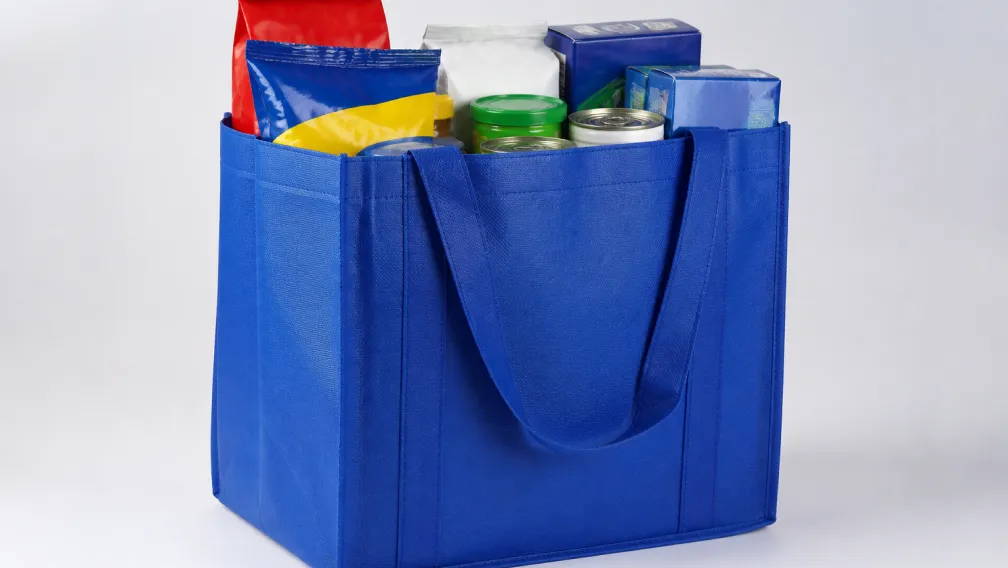
Evaluating a substrate for commercial transit requires measuring its reaction to kinetic stress. Tensile strength is formally quantified using ASTM D5034 grab tests, which measure the force required to fracture the fabric matrix. Spunbond fabric exhibits high tear resistance due to its continuous filament structure. A standard 80gsm spunbond tote can comfortably support 10 to 12 kilograms of retail merchandise without matrix failure.
In contrast, an SMS fabric of an equivalent GSM exhibits slightly lower overall tensile strength than pure spunbond. This occurs because a percentage of its mass is dedicated to the structurally weak meltblown core rather than continuous filaments. Procurement teams must calibrate the fabric density accordingly; if an SMS bag is specified for heavy fluid transport, the overall GSM must be increased to offset the lower tensile contribution of the middle filtration layer.
5. Hydrostatic Resistance and Fluid Management
Standard spunbond fabric is naturally hydrophobic but highly porous. Water will bead on the surface temporarily, but sustained hydrostatic pressure will force the liquid through the spaces between the 20-micron filaments. Therefore, standard spunbond is unsuitable for containing wet payloads or protecting contents from heavy environmental rain.
The SMS matrix radically alters fluid management. Measured via the AATCC 127 standard, the hydrostatic head pressure quantifies the material's resistance to water penetration. While a standard 80gsm spunbond may resist up to 15mm of water column, an 80gsm SMS fabric can withstand upwards of 50mm to 80mm depending on the precise meltblown ratio. The 2-micron meltblown core creates a dense physical barrier that drastically increases the hydrostatic head rating, allowing SMS bags to effectively repel liquid splashes and block particulate ingress.
6. Printability, Surface Energy, and B2B Branding
The exterior topography of the substrate dictates ink adhesion and visual fidelity.[cite: 21] Spunbond fabric possesses a distinct diamond or oval thermal point-bond pattern. Polypropylene inherently possesses low surface energy (typically around 29 dynes/cm).[cite: 21] To ensure permanent ink adhesion, the fabric web must pass through a corona discharge station, oxidizing the surface to raise the dyne level above 38.[cite: 21] This chemical modification allows high-opacity plastisol inks to anchor securely during standard silkscreen printing, yielding sharp spot-color vector graphics.[cite: 21]
Because SMS utilizes spunbond for its outer layers, its direct printing profile is identical to pure spunbond. However, neither raw spunbond nor SMS can support high-resolution photographic printing due to their porous nature.[cite: 21] When corporate branding requires full CMYK gradients, both substrates must undergo BOPP (Biaxially Oriented Polypropylene) film lamination.[cite: 21] The film is rotogravure printed and thermally bonded over the PP nonwoven fabric, sealing the structural and barrier layers beneath a smooth, waterproof graphic shield.[cite: 21]
7. Ultrasonic Welding and Automated Assembly
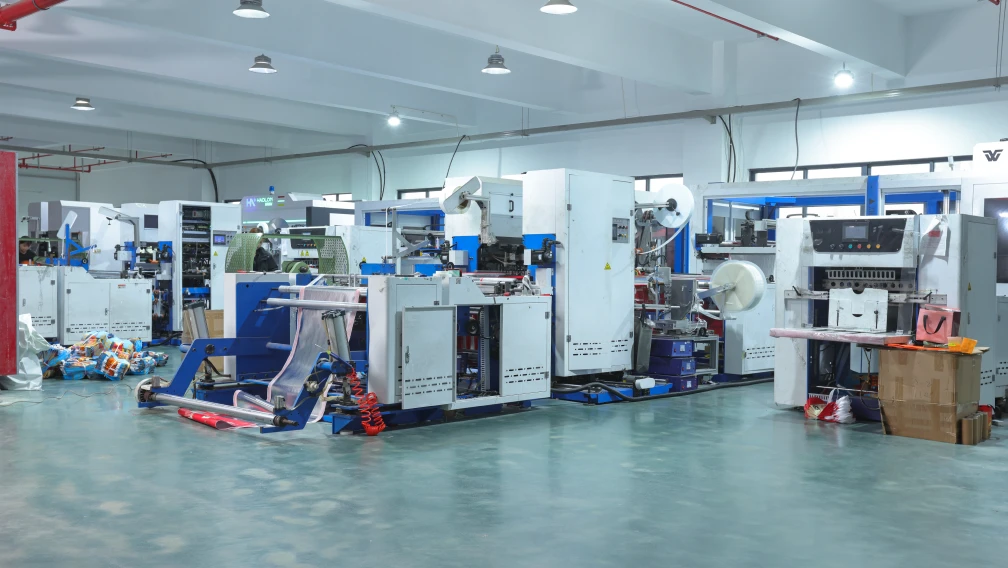
High-volume commercial packaging relies on automated ultrasonic assembly to minimize labor overhead. Ultrasonic welding utilizes high-frequency acoustic vibrations (typically 20kHz) to generate localized frictional heat, melting the thermoplastic fibers together to form a seamless bond. Both spunbond and SMS matrices are 100% polypropylene, making them highly reactive to ultrasonic energy.
The continuous filaments of spunbond fuse cleanly, creating strong, tear-resistant edge seams. SMS composite fabrics weld with equal efficiency; the acoustic energy penetrates all three layers, fusing the spunbond and meltblown fibers into a solid polymer joint. This threadless assembly is critical for maintaining the fluid barrier in SMS bags, as traditional needle stitching would puncture the meltblown core, creating micro-perforations that destroy its filtration integrity.
Conclusion
Specifying the optimal nonwoven substrate requires aligning material physics with exact operational hazards. Standard spunbond polypropylene remains the undisputed standard for commercial retail bags, offering the highest strength-to-cost ratio for dry merchandise. However, when the supply chain dictates strict fluid resistance, particulate filtration, or sanitary isolation, upgrading to an SMS composite matrix is an engineering necessity. By understanding the interplay between continuous filament strength and microfiber barrier properties, corporate procurement teams can deploy packaging assets that survive mechanical stress and protect their internal payloads. Contact our packaging engineering team to request technical data sheets, hydrostatic test reports, and physical substrate samples for your upcoming bulk order.