
Introduction: Why Wettability Decides Performance
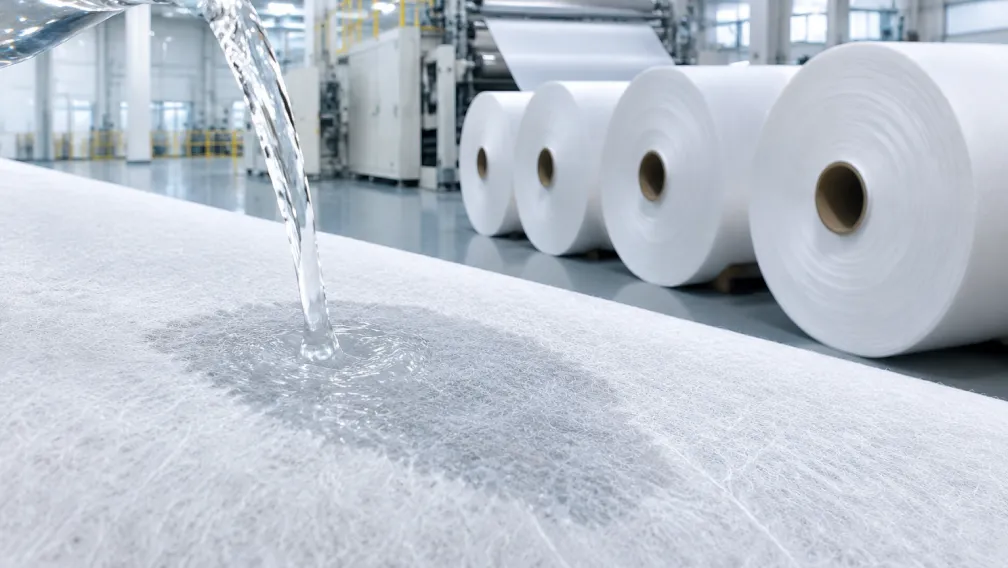
Polypropylene spunbond nonwoven is the highest-volume nonwoven substrate in the hygiene, medical, and agricultural sectors, yet raw polypropylene is naturally hydrophobic. Water beads on the untreated fiber surface instead of passing through it, which makes untreated fabric unusable wherever liquid acquisition, distribution, or filtration is required. Hydrophilic nonwoven fabric solves this through engineered surface chemistry: a controlled treatment converts the fiber surface from water-repelling to water-transporting, measured in strike-through seconds rather than marketing language. This guide explains the mechanisms behind hydrophilic modification, the test metrics that define performance, the principal application fields, and the specification points that matter when sourcing hydrophilic non-woven fabric in roll form.
1. The Baseline Problem: Polypropylene Is Hydrophobic
Polypropylene is a non-polar hydrocarbon polymer with a surface energy of roughly 29-30 mN/m. Water has a surface tension near 72 mN/m, and the mismatch means a water droplet placed on untreated PP fabric holds a contact angle well above 90 degrees and stays on the surface indefinitely. The fiber itself absorbs effectively zero moisture; polypropylene has a moisture regain below 0.05%. This is a strength in applications that demand water repellency, such as barrier layers and protective covers, and standard PP spunbond specifications are built around that inertness. For diapers, wipes, medical absorbent layers, and crop covers that must pass liquid or water vapor, the same property is a defect. Hydrophilic modification exists to close this gap without changing the base polymer.
2. How Hydrophilicity Is Engineered Into the Fabric
2.1 Topical Spin Finish (Surface Coating)
The most common industrial method applies a hydrophilic surfactant finish to the fiber web after spinning, by kiss-roll, spray, or saturation application, followed by drying. The surfactant molecules anchor their lipophilic tail to the polypropylene surface and orient their hydrophilic head groups outward, lowering the fiber-water contact angle below 90 degrees and allowing capillary transport through the web. Topical finishes are cost-effective and tunable, but the coating sits on the fiber surface and can wash off or migrate, which limits performance in products exposed to repeated wetting.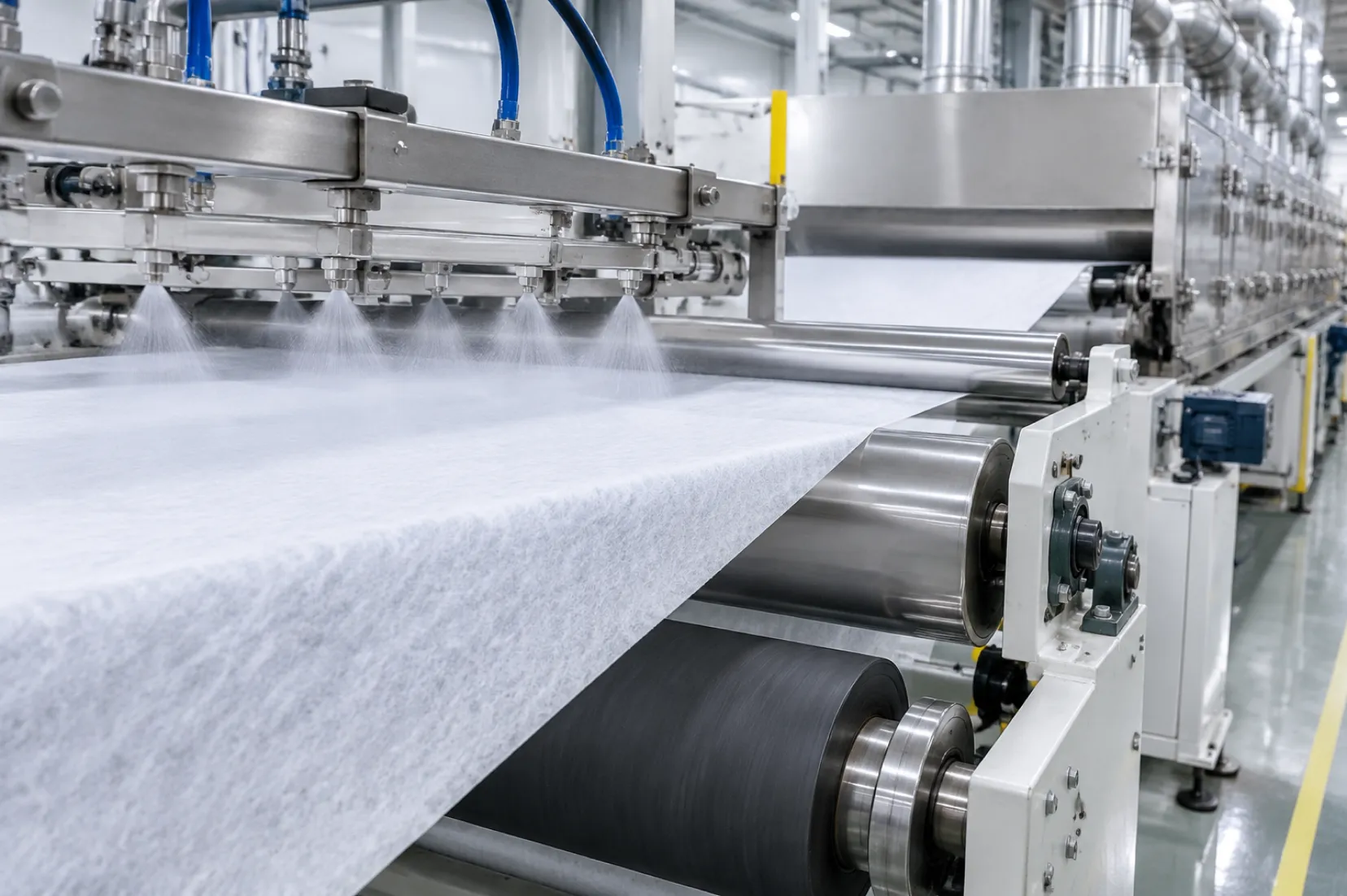
2.2 Melt Additive (Internal Masterbatch)
In the melt-additive approach, a hydrophilic masterbatch is compounded directly into the polypropylene before extrusion. The additive molecules migrate to the fiber surface during and after spinning, replenishing the hydrophilic layer continuously. Fabrics produced this way survive multiple wetting cycles, which is why the method is specified for multi-void hygiene products where strike-through performance must hold after the third or fourth insult. The trade-off is a higher raw-material cost and tighter process control during spinning.
2.3 Energy-Based Surface Activation
Plasma and corona treatment oxidize the polymer surface and introduce polar groups, raising surface energy without any chemical coating. The effect is uniform and free of additive residue, which suits medical and filtration uses with strict extractables requirements, but the modification decays over weeks of storage and is therefore combined with a light finish for shelf stability.
3. The Metrics That Define Hydrophilic Performance
Hydrophilic quality is quantified through standardized EDANA/INDA (WSP) test methods. Buyers should request test data against these parameters rather than accepting a generic hydrophilic label.
- Strike-through time. The seconds required for a defined volume of synthetic urine to pass through the fabric under a standard load (WSP 70.3 / EDANA ERT 150.5). Premium hygiene top sheets run under 3 seconds on the first insult; multi-void products are judged on third-insult strike-through.
- Rewet (wet-back). The liquid mass that returns to the surface under pressure after absorption (WSP 80.10). Low rewet, typically below 0.5 g for top-sheet grades, keeps skin dry in use.
- Run-off. The percentage of liquid that flows off an inclined fabric instead of penetrating, which exposes slow or uneven wettability.
- Finish durability. Repeated strike-through testing after wash or aging cycles distinguishes topical finishes from melt-additive constructions.
Test conditions influence results as much as the finish itself. Strike-through values shift with liquid temperature, electrode plate pressure, and the synthetic urine formulation, so comparisons between suppliers are only valid when the same WSP method revision and test liquid are used. Aging tests at elevated temperature give a useful early indication of finish migration and wettability decay before long-term storage data exists.
4. Principal Application Fields
4.1 Hygiene Top Sheets and Acquisition Layers
Baby diapers, feminine care, and adult incontinence products account for the largest consumption of hydrophilic nonwoven. Top sheets use 10-25 gsm SS or SSS spunbond with fast strike-through and minimal rewet. The acquisition distribution layer beneath uses bulkier, more permeable constructions to move liquid laterally into the absorbent core.
4.2 Medical and Wipes
Surgical drapes, wound-contact layers, disinfectant wipes, and patient wipes require controlled wettability plus low linting and low extractables. Hydrophilic spunbond and spunlace blends dominate here, and sterilization compatibility (EO or gamma) must be confirmed at the specification stage.
Flushable and dispersible wipes sit outside the spunbond category entirely and rely on wet-laid or spunlace constructions; buyers should not force a spunbond hydrophilic grade into a dispersible application, since polypropylene does not break down in water regardless of surface treatment.
4.3 Agriculture and Filtration
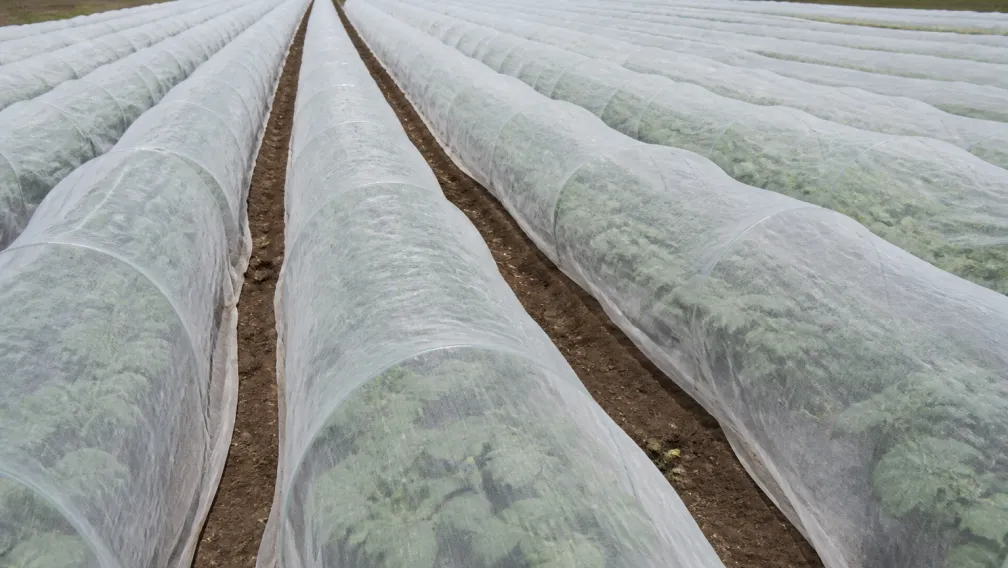
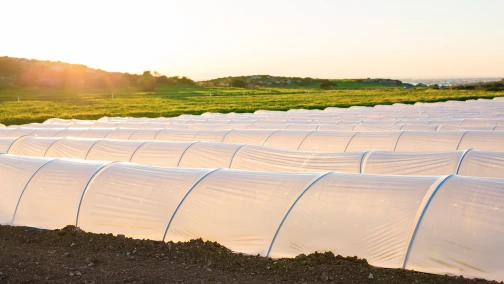
Hydrophilic-treated crop covers transmit irrigation water and rain evenly to the soil while still moderating temperature, extending the use of nonwoven fabric rolls in field applications. In liquid filtration, wettability controls flow rate and dirt-holding behavior, and hydrophilic grades of non-woven filter fabric are specified for coolant, milk, and beverage filtration where hydrophobic media would air-lock.
5. Hydrophilic and Hydrophobic Grades in One Product
Most converted products use both grades together, and the specification should treat them as a matched system. A disposable diaper pairs a hydrophilic top sheet that pulls liquid inward with hydrophobic leg cuffs and SMS barrier layers that block leakage. A surgical drape combines a hydrophilic absorbent zone around the fenestration with a hydrophobic repellent field elsewhere. Crop covers run the same logic in reverse: hydrophilic transmission through the fabric with hydrophobic edge strips that shed excess water. When the two grades are sourced separately, finish compatibility matters, because surfactant migration from a heavily finished hydrophilic layer can partially wet out an adjacent hydrophobic layer during hot storage. Confirming finish chemistry across all layers of the product at the sourcing stage prevents this failure mode.
6. Specification Checklist for Bulk Sourcing
Purchase specifications for hydrophilic nonwoven should fix measurable parameters. The table summarizes the fields that determine end-use performance.
| Parameter | Typical Range | Selection Note |
|---|---|---|
| Basis weight | 10-100 gsm | 10-25 gsm for hygiene top sheets; heavier for wipes and filtration |
| Construction | S, SS, SSS spunbond; SMS | Multi-beam SS/SSS gives better uniformity at low gsm |
| Hydrophilic method | Topical finish or melt additive | Melt additive for multi-void durability |
| Strike-through (1st / 3rd) | Under 3 s / under 5 s | Confirm against target product class |
| Rewet | 0.1-0.5 g | Lower values for skin-contact layers |
| Width and roll format | Up to 3.2 m, slit to order | Match converter line width to minimize trim waste |
| Compliance | REACH, FDA 21 CFR indirect contact, OEKO-TEX | Mandatory for skin-contact and medical uses |
7. Quality Control and Incoming Inspection
Incoming lots should be verified with a rapid strike-through check on samples taken across the web width, because finish application can vary between web center and edges. Wettability decay during storage is a real phenomenon for topical finishes; fabric held longer than six months should be retested before conversion. Certificates of analysis should report basis weight, strike-through, rewet, tensile strength in machine and cross direction, and the finish chemistry class. Suppliers running in-line monitoring with documented WSP method testing reduce the buyer-side inspection burden and the risk of line-down events at conversion.
Conclusion
Hydrophilic nonwoven fabric is defined by measurable liquid-handling performance: strike-through time, rewet, run-off, and finish durability. The choice between topical finish and melt-additive construction follows directly from how many wetting cycles the end product must survive. Specifying these parameters explicitly, and verifying them against WSP test data on each lot, is the difference between a fabric that carries a hydrophilic label and one that performs in the converted product.
Specify hydrophilic nonwoven with test data behind it. Avanor Pack supplies hydrophilic PP spunbond in S, SS, and SSS constructions from 10 to 100 gsm, with topical or melt-additive finishes and lot-level WSP test reports. Send your target application and gsm range for samples and a quotation.