
Introduction: The First Question Every Buyer Asks
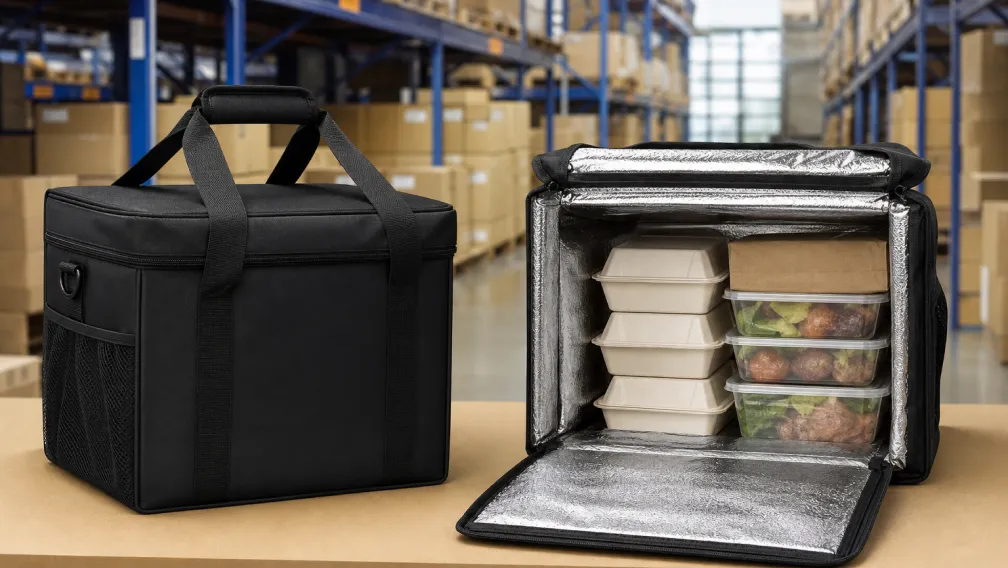
"How long will it keep the contents cold?" is the opening question in nearly every insulated bag inquiry we receive, and it is the question most supplier websites answer with a marketing number. The honest answer is that retention time is a property of a system—bag construction, cooling source, ambient conditions, and packing discipline—not of the bag alone. This reference gives commercial buyers three things: realistic retention benchmarks by bag class, the variables that move performance up or down, and a standardized testing protocol you can run in your own facility to compare supplier samples on equal terms. For the underlying material and structural engineering of these products, see our companion analysis of commercial insulated bag construction.
1. What an Insulated Bag Actually Does
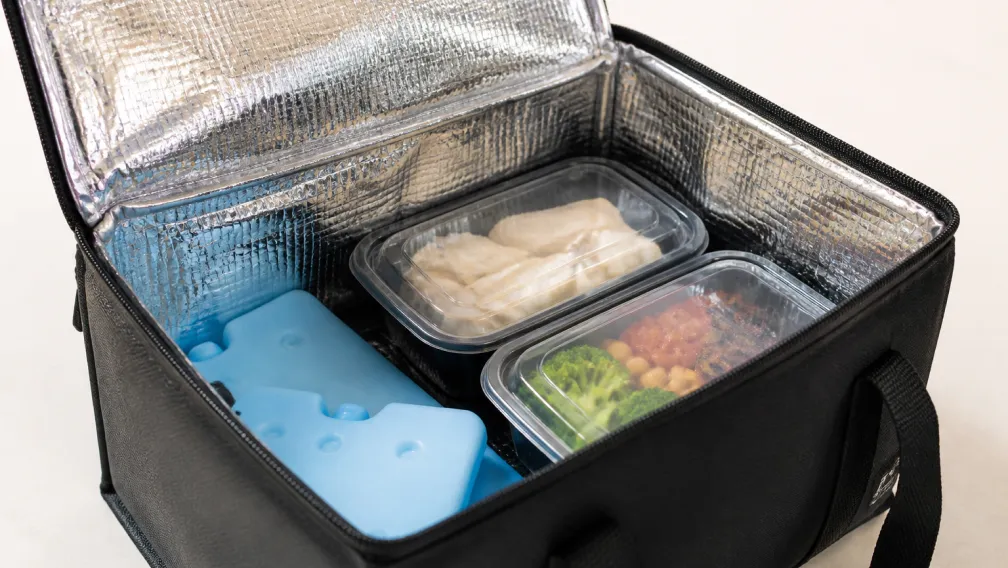
An insulated bag is a passive thermal device. It generates no cold and no heat; it slows the rate at which the interior temperature converges toward the ambient temperature. Two practical consequences follow. First, the bag protects the starting temperature of whatever goes inside—pre-chilled contents stay cold longer, and contents loaded warm will not become cold. Second, the cooling energy for any extended cold-duty application comes from the ice packs, gel packs, or frozen bottles loaded with the contents. The bag and the cold source are one system, and specifying one without the other produces meaningless expectations.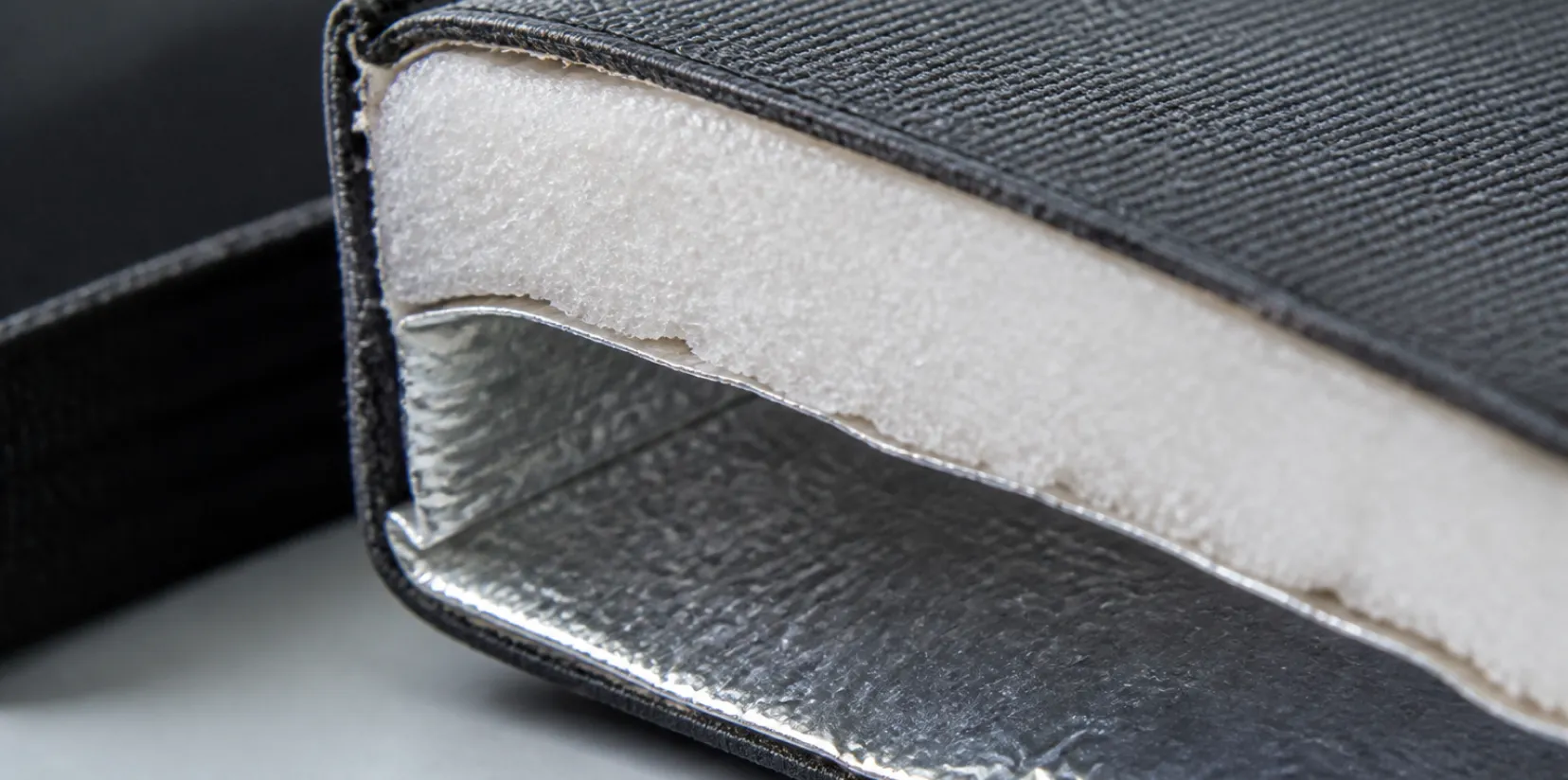
2. Realistic Retention Benchmarks
Aggregated field data and controlled third-party tests converge on the following working ranges, assuming pre-chilled contents and standard gel packs:
| Bag Class | Cooling Source | Indoor / Mild Ambient (20–25°C) | Hot Conditions (35°C+, vehicle, direct sun) |
|---|---|---|---|
| Basic insulated lunch bag | None | 1–3 hours | Under 1.5 hours |
| Basic lunch bag | 1 gel pack | 2–6 hours | 1.5–2.5 hours |
| Standard insulated grocery / delivery tote | 2–3 gel packs | 4–12 hours | 2–4 hours |
| Heavy-duty soft cooler (fishing, picnic and beach duty) | Block ice or multiple frozen bottles | 8–24 hours | 6–12 hours |
Three qualifications matter more than the numbers themselves. Cold-retention time, ice-retention time, and food-safe time are different measurements: a bag can still feel cool after the contents have crossed the safety threshold. USDA and FDA guidance anchors cold food safety at 40°F (4°C) or below, hot holding at 140°F (60°C) or above, and limits perishable food in the 40–140°F danger zone to two hours—one hour above 90°F (32°C) ambient. And every figure above assumes the bag stays closed; each opening exchanges interior air and costs measurable retention time.
3. The Variables That Move the Number
When two bags of similar appearance perform very differently, the cause is almost always one of these six variables:
- Insulation thickness and density. Closed-cell EPE foam at 3mm serves short-route delivery; 5–8mm serves extended catering and outdoor duty. Thickness and density both matter, and economy bags cut both.
- Closure integrity. A heavy-duty zipper with an internal draft flap restricts convective air exchange far better than a loose hook-and-loop strip. The closure is usually the largest thermal leak in the assembly.
- Liner continuity. A seamless, heat-sealed foil or PEVA liner blocks both leaks and thermal bridging; sewn-through liners perforate the barrier at every stitch line.
- Ambient differential. Heat transfer scales with the temperature gap. The same bag loses roughly 30–40% of its retention time moving from an air-conditioned room to a 28°C day, and far more inside a parked summer vehicle.
- Fill ratio. A fully packed bag with minimal air space outperforms a half-empty one, because air is the medium that carries heat to the contents. Frozen bottles are a legitimate gap filler.
- Pre-chilling discipline. Loading frozen packs into a warm bag spends part of the cooling energy cooling the bag itself. Thirty to sixty minutes of pre-chilling the empty bag recovers that loss.
4. Cooling Source Selection
Because the cooling source supplies the energy in a passive system, its selection deserves the same attention as the bag. The working options, in order of practical cold delivery:
- Gel packs. Clean, repositionable, and the standard for lunch, grocery, and delivery duty. Size the pack mass to the load; one small gel pack typically buys one to two additional hours, two or more packs buy two to four.
- Frozen water bottles. The most practical gap filler for picnic and travel programs: no loose meltwater, dual use as drinking water, and a long melt curve similar to block ice.
- Block ice. Melts slowest per kilogram and is the correct choice for extended outdoor and fishing duty; cubed ice cools faster but exhausts sooner and floods the liner.
- Phase-change packs. Engineered packs rated at specific set points (for example +5°C or -21°C) suit pharmaceutical and premium meal-kit programs where the temperature band is contractual, at a corresponding price.
- Dry ice. Specialized use only. It requires vented handling, is restricted on air freight, and embrittles standard liners at direct contact.
Placement matters as much as selection. Cold air sinks, so packs positioned above and around the contents outperform packs parked at the bottom, and the most temperature-sensitive items should sit in the center of the cold mass rather than against the bag wall.
5. The Hot Side Behaves Differently
Hot holding is the harder problem, for two reasons. The safety threshold sits at 140°F (60°C), and most cooked food leaves the kitchen only 20–30 degrees above it—an order of magnitude less margin than refrigerated food has below 40°F. Practical hot-side windows are therefore shorter than cold-side windows for the same bag: expect one to three hours of useful retention from a standard delivery bag loaded with genuinely hot food. Commercial programs extend this by preheating the empty bag, using preheated thermal containers inside it, and minimizing dead air space. Hot and cold items should never share one compartment; each side shortens the other's window.
6. A Fair Testing Protocol for Comparing Suppliers
Supplier samples can be compared rigorously without laboratory equipment. The protocol that removes noise:
- Fix the constants. Identical total load weight, identical ice-pack weight, identical contents, same room, same opening schedule, same measurement intervals. Change only the bag.
- Track the curve, not the endpoint. Log interior temperature with a probe thermometer or data logger at 1, 2, 4, and 6 hours. A single end-of-day reading hides everything that matters.
- Record supporting metrics. Remaining ice percentage at 6 hours, visible leakage after an inverted shake test, liner condition after meltwater, and shape distortion when carried fully loaded.
- Reject misleading setups. Tests run with 100% ice fill flatter every bag and reflect no real operation; mixed loads of contents plus a defined ice weight are the honest configuration. Comparing one sample in shade against another in sun, or varying ice weight between samples, invalidates the comparison entirely.
A simple worksheet—temperature at 2h and 6h, remaining ice, leakage, carry comfort, clean-up condition—ranked across samples will separate suppliers more reliably than any catalogue claim. We run this protocol on our own insulated cooler bag production samples and share the raw curves on request.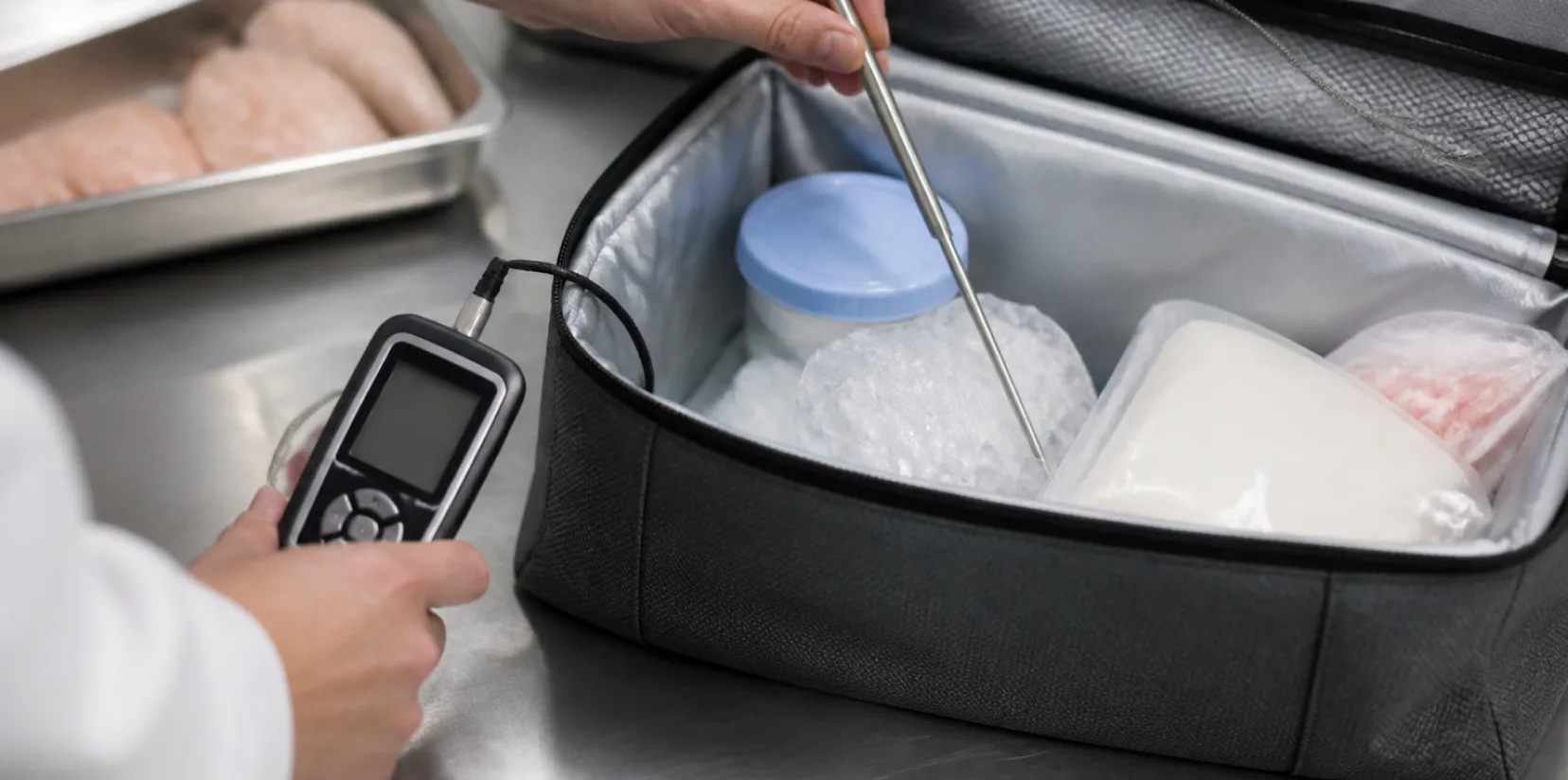
7. Specifying Thermal Performance in a Purchase Order
The final step is converting benchmarks into contractual language. Define the duty cycle first: a 30-minute restaurant delivery route, a two-hour catering window, a grocery tote expected to bridge a two-to-four-hour trip home, or an eight-hour-plus outdoor program each implies a different foam thickness, closure grade, and cooling-source allowance. Then write the performance requirement as a test condition rather than an adjective—for example, "interior at or below 4°C after 4 hours at 25°C ambient, loaded with X kg of chilled contents and Y kg of gel packs"—and require the pre-production sample to pass that condition in your own facility before bulk release. Batch-level consistency should be protected with the same retention test applied to a random unit from each production run. Programs sourcing hot-cold bags for mixed menus should specify both duty directions separately, since the hot-side window is the binding constraint.
Conclusion
Insulated bag performance is measurable, comparable, and specifiable. Realistic benchmarks run from one to three hours for an unloaded lunch bag up to eight to twenty-four hours for a heavy-duty soft cooler with block ice, with ambient temperature, closure integrity, fill ratio, and opening discipline moving any bag within or below its class range. Buyers who test samples under fixed conditions and write the duty cycle into the PO get predictable field performance; buyers who accept catalogue hours get complaints. Send us your route profile, ambient conditions, and target window, and our team will return a written specification with samples and test data. Contact our technical team to scope your program.