
Introduction: The Shift to Standardized Thermal Fleet Assets
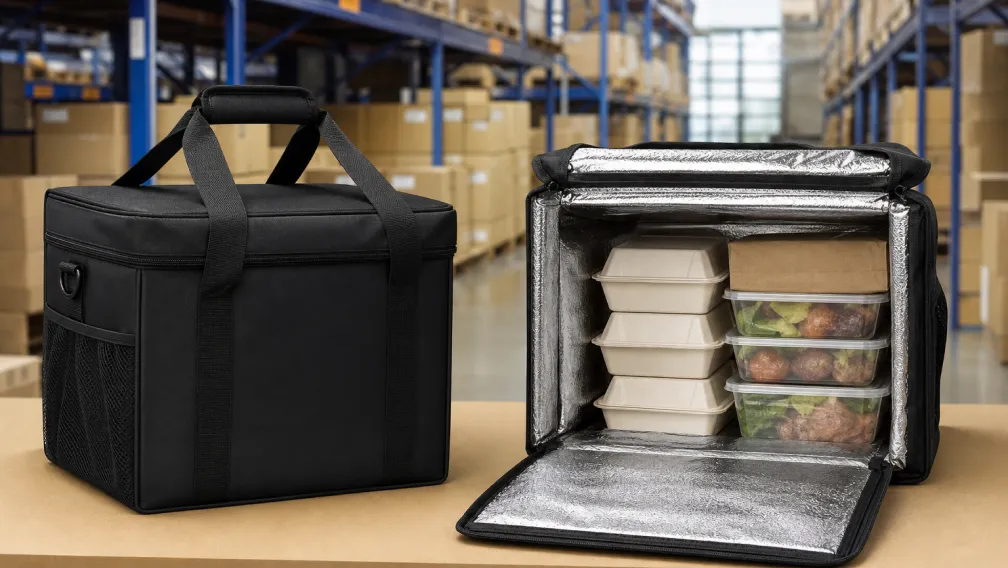
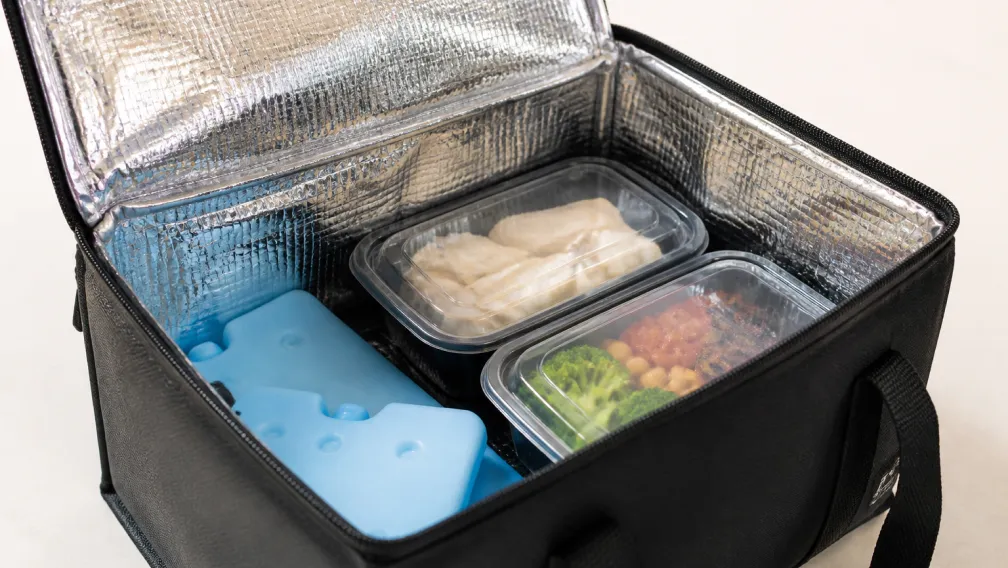
In the commercial food delivery and multi-location catering sectors, the insulated delivery bag has evolved from an optional accessory to a critical piece of operational infrastructure. Franchise restaurant networks and delivery aggregators frequently suffer operational losses due to reliance on substandard, gig-worker-provided thermal bags. These disparate bags lack uniform thermal retention capabilities, fail to meet commercial sanitation standards, and suffer premature structural failure under heavy daily use. The failure to maintain the food cold chain or hot hold temperatures directly results in product degradation, food safety compliance violations, and immediate customer attrition. The engineered solution for multi-unit restaurant operations is the transition to standardized, corporate-owned thermal transit assets. This guide defines the material specifications, structural engineering, and fleet procurement strategies required to deploy a unified insulated cooler bags program that ensures precise temperature control, hygienic compliance, and maximized operational lifecycle.
1. Thermodynamics of High-Frequency Hot and Cold Transit
Commercial food delivery imposes severe thermal stress on packaging. A bag may transport a 75°C (167°F) pasta order, undergo rapid cleaning, and subsequently transport sub-zero ice cream inventory. Maintaining thermal stability across varied payloads requires a precise architectural stack.
Heat transfer in soft-sided thermal vessels occurs primarily through conduction across the bag's walls and convection through unsealed closures. To arrest conductive loss in high-frequency commercial environments, the insulation core must possess high density and rapid recovery characteristics. Standard 2mm or 3mm Expanded Polyethylene (EPE) foam, common in retail promotional items, is insufficient. Commercial specifications mandate a minimum of 8mm to 10mm high-density EPE or EVA (Ethylene-Vinyl Acetate) foam. This thickness interrupts the thermal bridge, keeping hot payloads above the critical 60°C (140°F) food safety threshold for up to 60 minutes of transit time, independent of external ambient temperatures.
A secondary, often overlooked factor in hot food transit is latent heat and condensation management. Hot food emits steam. If the thermal bag is entirely impermeable and lacks internal air volume management, steam condenses on the interior walls and drops back onto the packaging, degrading paper cartons and ruining the texture of fried foods. High-end commercial bags manage this by integrating adjustable ventilation flaps near the top seams, allowing operators to vent excess steam during short trips while keeping the primary chamber thermally stable.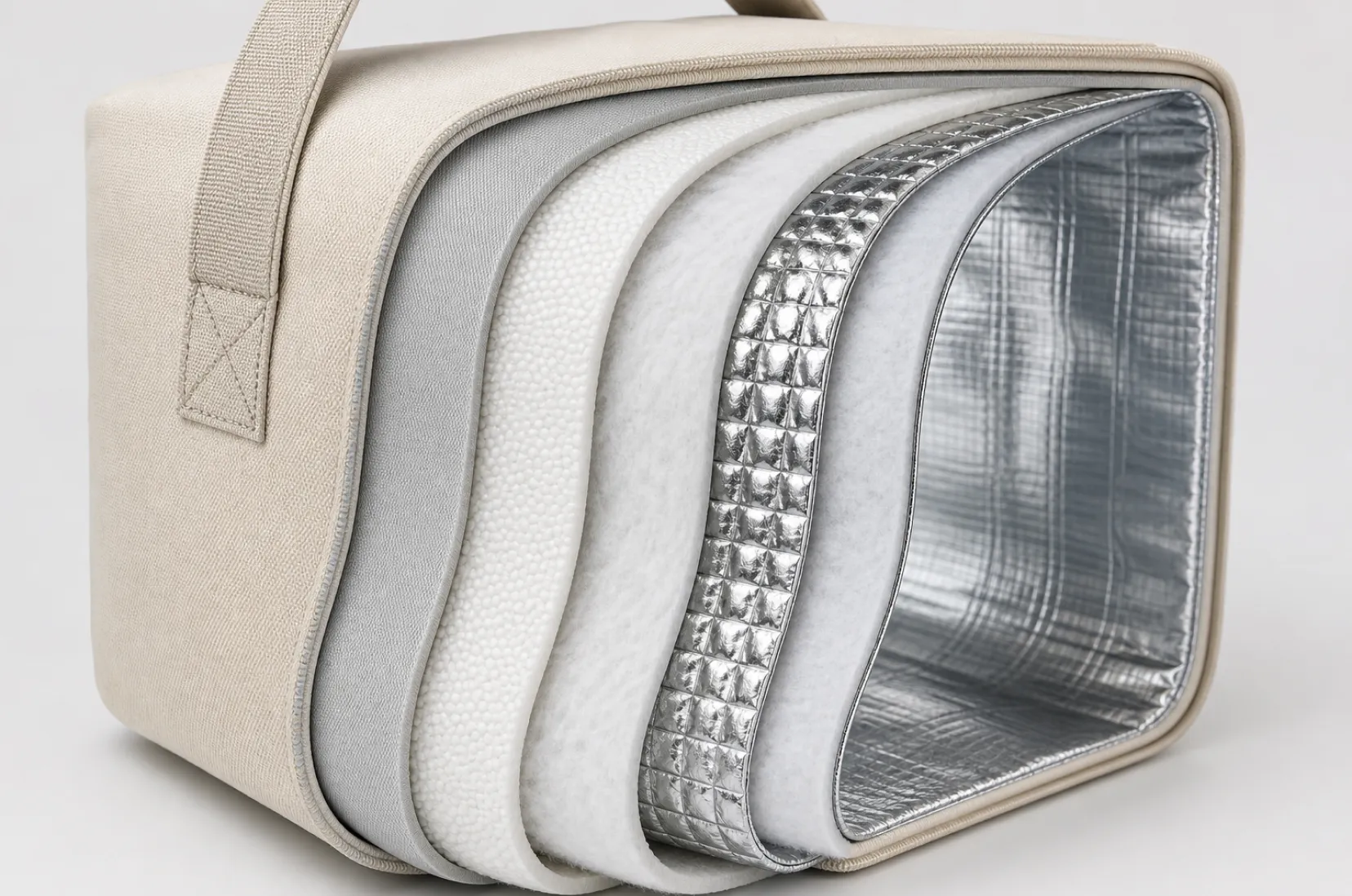
2. Hygiene Compliance and Interior Membrane Engineering
The interior lining of a commercial delivery bag is the critical interface for food safety. Spills are inevitable in high-volume transit. The standard retail construction—stitched aluminum foil—presents a severe biological hazard in commercial applications. Needle punctures from stitching create micro-perforations along every seam. When soups or sauces spill, organic matter seeps through these perforations into the internal EPE foam. Once inside the foam, bacteria (including E. coli and Salmonella) incubate in a dark, warm environment, rendering the bag permanently unsanitary and producing severe odors.
The mandatory solution for commercial fleet assets is the implementation of PEVA (Polyethylene Vinyl Acetate) or TPU (Thermoplastic Polyurethane) interior linings utilizing ultrasonic welding technology. Ultrasonic welding uses high-frequency acoustic vibrations to melt the edges of the polymer panels together, eliminating all needles, threads, and perforations. This process creates a continuous, 100% waterproof internal basin. Furthermore, PEVA is chemically resistant to standard commercial sanitizers, such as quaternary ammonium compounds. Operators can aggressively wipe down the interior basin multiple times a day without degrading the material structure, ensuring strict compliance with local health department regulations.
3. Exterior Shell Specifications for High-Abrasion Environments
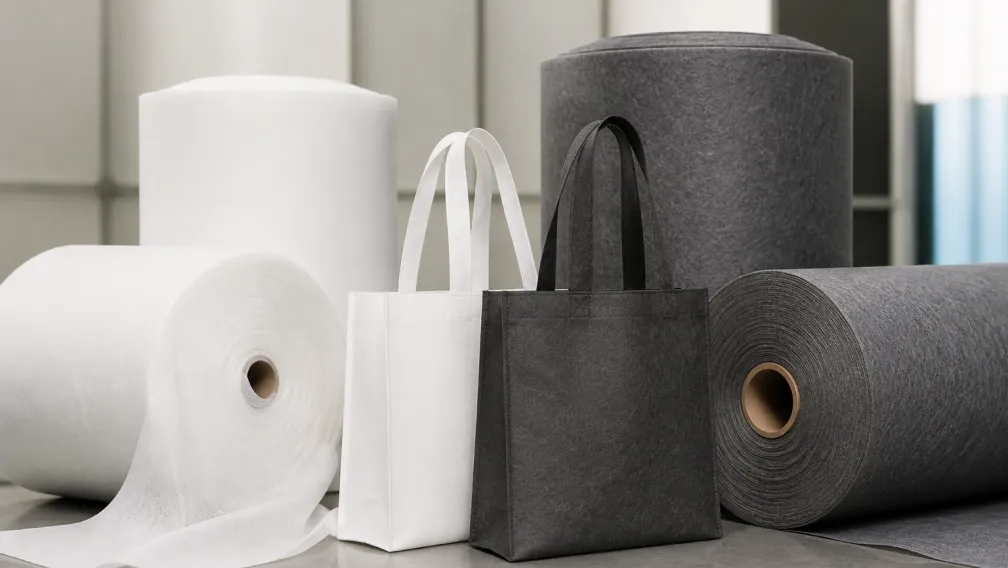
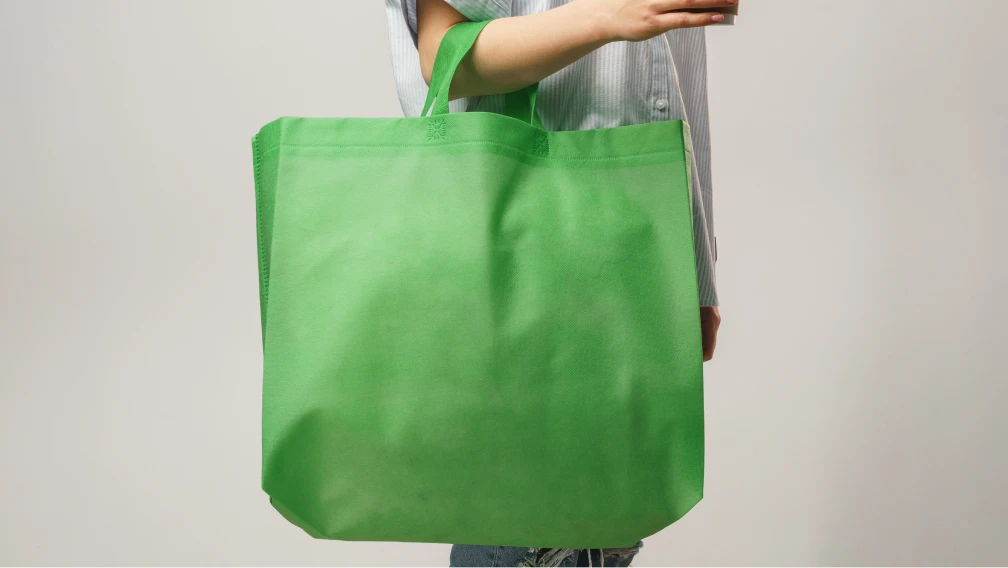
The exterior shell of a fleet asset must survive extreme mechanical and environmental abrasion. Bags are dragged across concrete curbs, strapped tightly to motorcycle metal racks, and exposed to continuous UV radiation and heavy rain. Lightweight nonwoven polypropylene, while excellent for nonwoven bags in retail environments, will disintegrate within weeks under commercial delivery stress.
| Exterior Material | Denier / Density | Commercial Application Profile |
|---|---|---|
| Oxford Polyester | 600D to 900D | The industry standard for gig-economy networks. High tensile strength, resists tearing from sharp corners, and accepts dense screen printing for branding. Must be specified with an internal PU (Polyurethane) coating for water resistance. |
| PVC Tarpaulin | 500D (500gsm+) | The ultra-heavy-duty specification. Entirely waterproof, highly resistant to concrete abrasion, and easily wiped clean on the outside. Specified for heavy catering operations and regions with high annual rainfall. |
| Ballistic Nylon | 1680D | Maximum durability and tear resistance. Extremely stiff and heavy. Utilized for highly specialized medical transit or premium catering where the asset lifecycle is expected to exceed 36 months. |
Procurement teams must ensure that whichever exterior shell is selected, it features a hydrophobic coating (like PU or PVC). If the outer shell absorbs rainwater, water transfers thermal energy rapidly, effectively destroying the insulating properties of the internal foam core.
4. Structural Load Distribution and Ergonomics
A standardized delivery bag must safely transport heavy, shifting payloads without tearing or causing ergonomic injury to the courier. A full catering order involving multiple gastropans can easily exceed 15 kilograms. Standard straight-line stitching on carry handles will fail rapidly under sheer stress.
Engineered structural specifications require handle webbing to be constructed from high-tensile spun polyester. More importantly, the attachment architecture must bypass the outer fabric. Heavy-duty bags require the webbing to run continuously down the sides and cross entirely beneath the bottom panel of the bag, effectively cradling the payload. Where the webbing attaches to the top edges, it must be secured using reinforced X-box cross-stitching.
To prevent the crushing of delicate food containers, commercial bags must integrate rigid internal support structures. This is achieved by inserting corrugated PP (Polypropylene) plastic boards into zippered sleeves within the bottom panel and side walls. These boards distribute the downward force of heavy trays evenly across the base and keep the bag's cubic shape intact even when partially empty, preventing top-heavy loads from collapsing.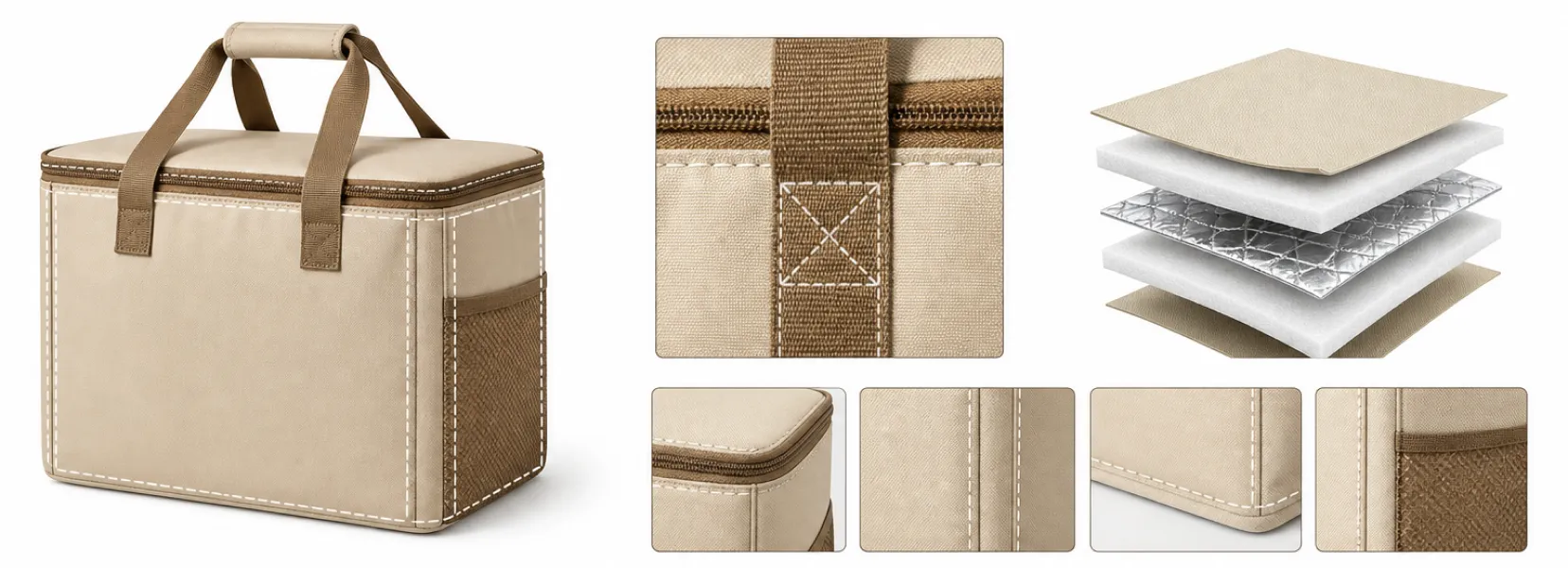
5. Dimensional Reverse Engineering and Fleet Sizing Logic
Standardizing a fleet requires optimizing bag dimensions to match the restaurant's specific packaging footprint. Dead air space inside a thermal bag acts as a heat sink; the food must expend energy to heat the empty air, accelerating temperature loss. Therefore, sizing must be precise.
- Pizza Logistics: Requires a low-profile, wide-footprint bag (e.g., 18x18x6 inches) with heavy rigid bottom panels to prevent the box from bowing in the center, which causes cheese to slide off the pizza.
- Catering Gastropans: Engineered around the international Gastronorm (GN) sizing system. Bags are typically sized to hold two or three 1/1 GN foil pans perfectly, ensuring zero lateral movement during transit.
- Beverage Transit: Tall, narrow cubic structures equipped with internal adjustable Velcro dividers to securely lock drink carriers in place and isolate cold beverages from hot food items in a dual-chamber setup.
By standardizing on two or three specific dimensional SKUs across a franchise network, operations directors can ensure that all menu combinations fit precisely, minimizing thermal loss and preventing physical damage to the food.
6. Visual Identity, Asset Tracking, and Security
Fleet bags function as highly visible mobile billboards navigating urban centers. The exterior material dictates the printing technology. 600D Polyester allows for crisp, multi-color silk-screen printing of corporate logos. For complex gradients, heat transfer printing is utilized.
Beyond branding, commercial assets require tracking infrastructure. High-turnover delivery environments face asset loss and theft. Industrial specifications include the integration of clear, heavy-duty PVC windows on the top or front panels. These windows serve a dual purpose: they hold routing tickets for contactless dispatch systems, and they house serialized asset tags or QR codes. By scanning bags in and out of the central dispatch hub, management can track the operational lifecycle of each unit, enforce cleaning schedules, and reduce unassigned inventory loss.
7. Executing a TCO-Driven Procurement Strategy
Procuring commercial delivery bags based solely on the lowest initial unit cost is an operational error. Cheap bags with stitched foil linings and 2mm foam fail rapidly, requiring replacement every few weeks and causing unquantifiable damage to food quality.
A rigorous B2B procurement strategy focuses on Total Cost of Ownership (TCO). A heavily engineered bag with PEVA sonic welding, 600D PU-coated shell, and 8mm EPE foam may carry a higher initial unit cost, but its operational lifecycle extends from 3 weeks to 9–12 months of daily commercial use. When evaluating suppliers, corporate procurement must demand pre-production prototypes. These prototypes must be subjected to real-world stress testing: filling the bag with 15kg of dead weight for dynamic drop testing, and placing thermal data loggers inside the bag to verify heat retention over a 60-minute transit window. Only after these mechanical and thermal validations pass should mass production commence.
Conclusion
Transitioning from fragmented, low-quality delivery bags to standardized, corporate-owned thermal assets is a mandatory evolution for expanding food franchises. Success in last-mile thermal transit requires dictating strict engineering specifications: thick EPE foam for thermal interruption, ultrasonic welded PEVA linings for absolute hygiene compliance, and high-denier polyester shells with X-box webbing for mechanical durability. By reverse-engineering the bag dimensions to fit specific menu packaging and calculating procurement based on long-term lifecycle value, operators can protect their food quality and scale their delivery networks securely. Contact our engineering team to submit your payload dimensions and initiate the prototyping of your standardized fleet assets.