Search

Enter keywords to search for products, blog posts, and more.


Home > Custom Nonwoven Sacks

Custom Nonwoven Sacks

Custom Nonwoven Sacks

Industrial-grade spunbond polypropylene sacks engineered for commercial laundry, hospital linen management, and bulk textile storage.

A nonwoven sack functions as a high-capacity, breathable textile container designed for the collection, transport, and staging of soft goods. Manufactured from 50–100 GSM virgin PP spunbond fabric, these sacks provide higher tensile strength and tear resistance compared to standard polyethylene liners, while maintaining critical air permeability to prevent moisture accumulation in soiled linens.

What defines a commercial nonwoven sack? It is a reusable, multi-cycle textile enclosure featuring a single or double poly-cord drawstring, overlock-stitched seams, and a load-bearing base. It serves as the standard operational consumable for hotel housekeeping, healthcare ward sorting, and warehouse soft-goods logistics. Because we manufacture the substrate, print the fabric, and sew the bags in-house, we control the exact dimensional tolerances, GSM specifications, and corporate branding consistency across multi-year procurement contracts.

  • 100% virgin PP substrate ensuring structural integrity
  • Single or bilateral drawstring closure mechanisms
  • High air permeability to reduce mildew risks
  • Overlock double-stitched seams for dynamic load bearing
  • Configurable grammage from 50 GSM to 100 GSM
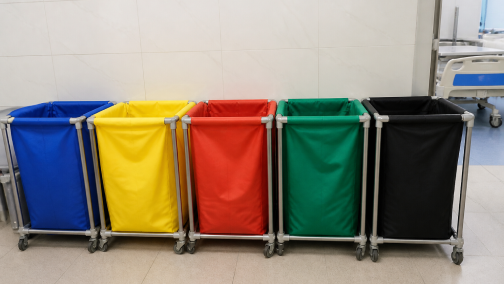
  • Pantone-matched fabrics for visual facility sorting
  • Integrated silkscreen printing or woven label application
  • Engineered for repeat commercial washing cycles

Technical Specifications

ParameterSpecification
Substrate Material100% Virgin Spunbond Polypropylene (PP)
Fabric Grammage50–100 GSM, determined by dynamic load requirements
Closure MechanismPoly-cord single or double drawstring, optional spring toggle
Seam ArchitectureOverlock stitched side seams, reinforced base gussets
Air PermeabilityHigh porosity to mitigate condensation and odor accumulation
Secondary HardwareOptional stitched PP webbing handles for load transfer
MaintenanceCompatible with low/medium temperature commercial washing
Corporate BrandingSilkscreen printing, heat transfer, or sewn woven labels
Dyeing & ColorMasterbatch dyed, full Pantone (PMS) matching available
Testing & ComplianceISO 9001 facility; SGS-certified ink formulations
Dimensional SpecsCustomizable from standard hotel-room size to industrial cart liners


Commercial Sack Configurations

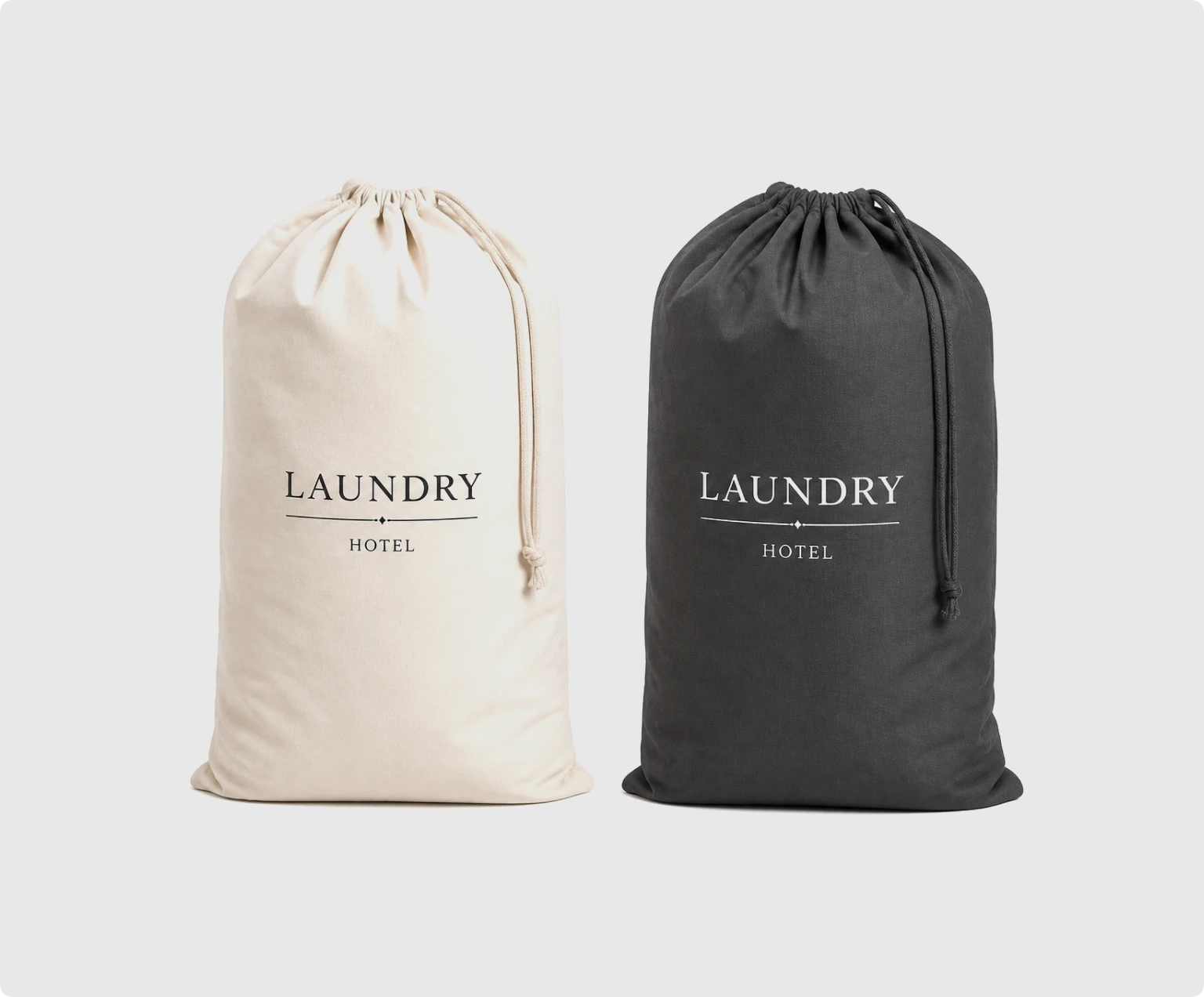
Hospitality Laundry Sacks

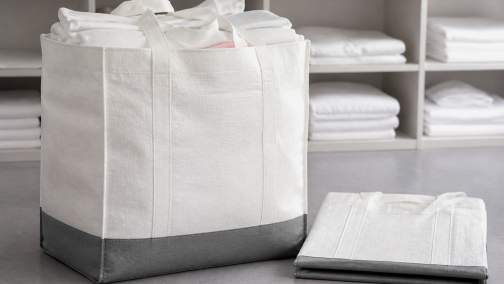
Bulk Storage Sacks

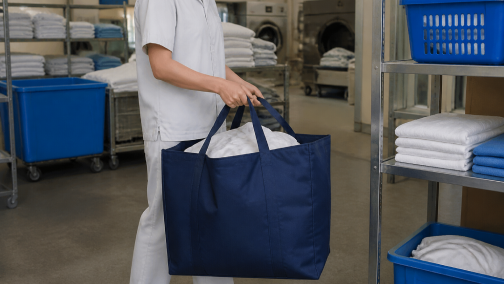
Utility Handled Sacks

Departmental Sorting Sacks


Hospitality and Housekeeping Integration

In hospitality environments, nonwoven sacks replace single-use plastics for in-room laundry collection and housekeeping cart organization. The air permeability of the polypropylene fibers prevents moisture condensation on damp towels, mitigating mildew risks during staging and transport. Corporate branding is typically applied via spot-color silkscreen or sewn woven labels to maintain property identification.


Healthcare Linen Management

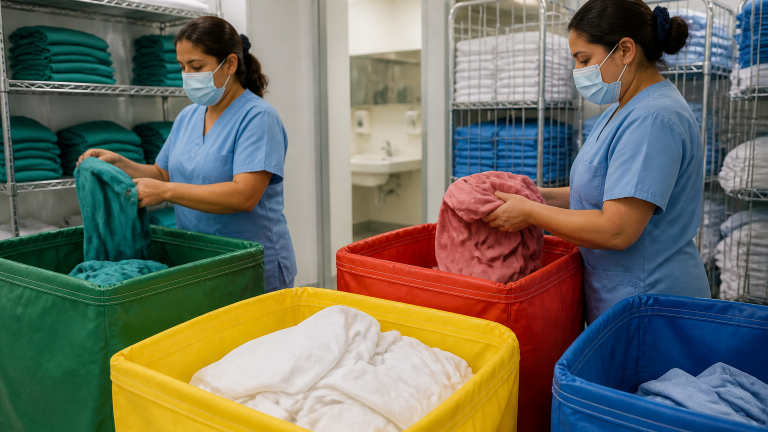
Healthcare facilities and commercial laundries utilize color-coded nonwoven sacks to enforce infection control protocols and sort soiled linens by ward. The synthetic polymer fibers do not absorb moisture readily and withstand standard commercial washing cycles, ensuring an extended operational lifespan and lower cost-per-use compared to traditional heavy cotton canvas alternatives.


Warehouse and Retail Soft-Goods Storage

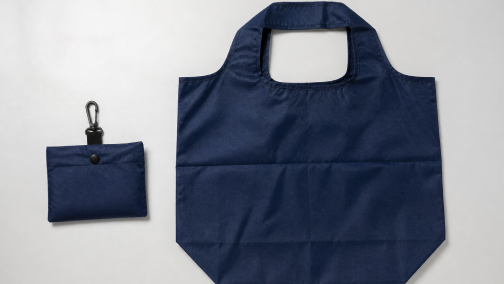
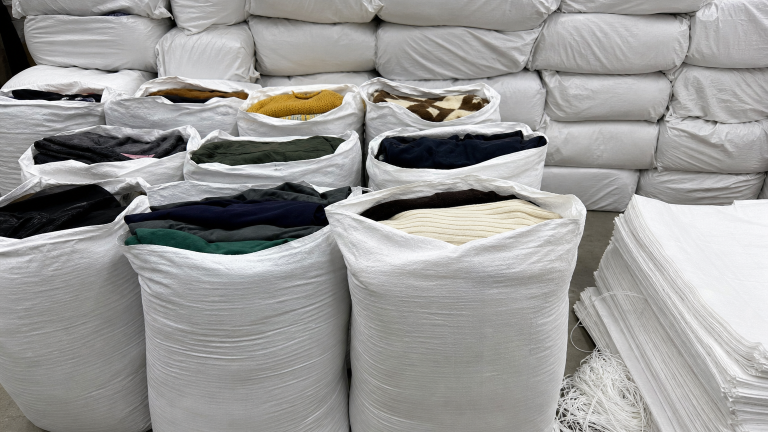
For industrial storage, nonwoven bulk sacks and nonwoven garment bags offer a cost-effective, breathable alternative to rigid polymer bins. The fabric matrix prevents dust particulate accumulation while allowing stored textiles—such as seasonal retail apparel, bulk bedding, or raw fabric rolls—to off-gas and remain odor-free in long-term warehousing scenarios. The sacks pack flat when empty, optimizing reverse logistics.

Commercial Sack Projects

logo
logo
logo
logo
logo
logo
logo
logo
logo

About Changyuan Nonwoven

We are a nonwoven fabric and bag manufacturer based in Changzhou, China, running a full production line from raw material to finished goods since 2012. Our factory handles fabric extrusion, 7-color gravure printing, lamination, and bag making in-house, serving clients in 20+ countries with a daily output of 200,000 pieces.

Company factory how we work

FAQs

What constitutes a commercial nonwoven sack?

A commercial nonwoven sack is a high-volume textile container manufactured from spunbond polypropylene (PP), featuring overlock-stitched seams and a drawstring closure. It is engineered specifically for the bulk collection, sorting, and storage of soft goods in B2B environments such as hotels and hospitals.

Can spunbond polypropylene sacks withstand commercial washing?

Yes. Virgin spunbond PP exhibits high chemical resistance and mechanical durability, allowing the sacks to undergo repeated low-to-medium temperature commercial wash cycles without catastrophic structural degradation or significant tensile loss.

What are the standard customization parameters for bulk orders?

Clients specify the exact dimensional footprint, fabric grammage (typically 50-100 GSM), base configuration (flat or gusseted), closure type (single or double drawstring), hardware (toggles), and brand application (silkscreen or sewn woven label).

How do you determine the correct GSM for a specific facility load?

Fabric grammage is calculated based on the target dynamic load. Light guest-room laundry requires 50-60 GSM for maximum breathability. Dense, heavy items like uniforms or warehouse stock necessitate 80-100 GSM to prevent base seam failure during transport.

What closure and transport systems are available for bulk sacks?

We offer single-pull drawstrings for rapid closure, double-pull drawstrings for balanced load tension, and integrated PP webbing handles for ergonomic manual transport of heavy loads in laundry rooms and warehouses.

Are nonwoven sacks environmentally compliant for enterprise procurement?

Yes. Polypropylene is a stable, non-toxic polymer (Recycling Code 5). By replacing single-use polyethylene liners with multi-cycle washable nonwoven sacks, facilities significantly reduce their aggregate plastic waste output and lower long-term consumable costs.

Technical Guide: Specifying Commercial Nonwoven Sacks

Specifying nonwoven sacks for enterprise operations requires matching the fabric grammage (GSM) and closure mechanics to the facility's daily dynamic load. Unlike single-use plastic liners, nonwoven drawstring bags are manufactured for multi-cycle commercial use, requiring specific structural reinforcements.

Grammage (GSM) and Load Capacity Correlation

The mechanical integrity of a nonwoven sack depends entirely on the spunbond PP density. A higher GSM yields greater puncture resistance and tensile strength, while a lower GSM maximizes breathability and folding efficiency.

Fabric WeightMaterial CharacteristicsPrimary Applications
50–60 GSMHigh breathability, high flexibilityGuest-room laundry, light apparel sorting
70–80 GSMBalanced tensile strengthHealthcare ward linen collection, gyms
90–100 GSMMaximum puncture resistanceIndustrial warehouse staging, cart liners

Closure Mechanisms and Seam Architecture

How do seam types impact nonwoven sack durability? Load failure in bulk sacks typically occurs at the bottom gusset or side panels. For commercial-grade sacks, we utilize multi-thread overlock stitching to distribute mechanical stress evenly across the fabric edge. This is significantly stronger than standard single-needle lockstitch or ultrasonic point-bonding, which are generally insufficient for high-volume high-capacity nonwoven bags.

Hardware OptionFunctional BenefitOperational Use Case
Single DrawstringRapid, one-handed closureLow-friction hospitality environments
Double DrawstringSymmetrical tension distributionHeavy linen loads, transport security
Webbing HandlesErgonomic vertical liftingManual warehouse transport, laundry facilities
Visual Color-CodingImmediate department identificationHealthcare cross-contamination prevention

Procurement Verification Parameters

When sourcing bulk sacks for facility management, ensure the specification sheet defines the exact GSM tolerance, confirms the use of virgin PP (recycled fillers degrade tensile strength rapidly), and outlines the specific seam construction. As a vertically integrated manufacturer, we issue physical pre-production samples to establish these technical baselines before executing bulk contract orders.