Search

Enter keywords to search for products, blog posts, and more.


Home > Picnic & Beach Cooler Bags

Picnic & Beach Cooler Bags

Picnic & Beach Cooler Bags

Engineered large-capacity thermal totes for coastal and outdoor environments. Constructed with closed-cell EPE foam, HF-welded PEVA linings, and abrasion-resistant 600D polyester substrates.

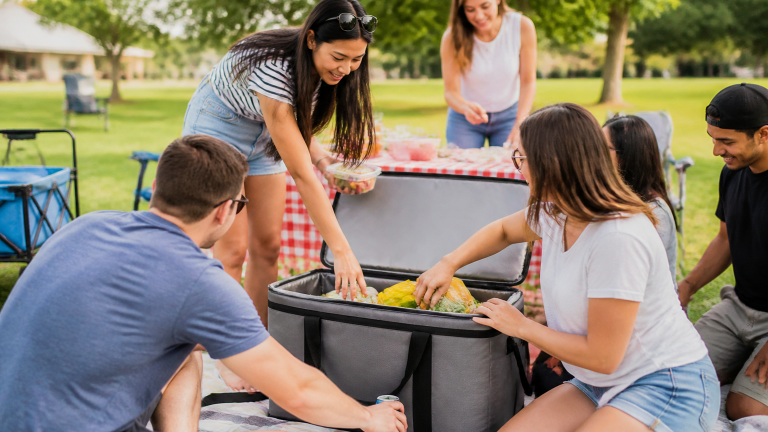
A picnic or beach cooler bag functions as a high-volume insulated cooler bag designed to manage significant thermal mass over extended outdoor durations. Unlike compact personal lunch bags, these group-sized assets must isolate large food and beverage payloads from extreme ambient temperatures and direct solar radiation. The structural architecture relies on a 5mm to 8mm closed-cell Expanded Polyethylene (EPE) foam core. This closed-cell structure actively interrupts conductive heat transfer while preventing moisture absorption from condensation.

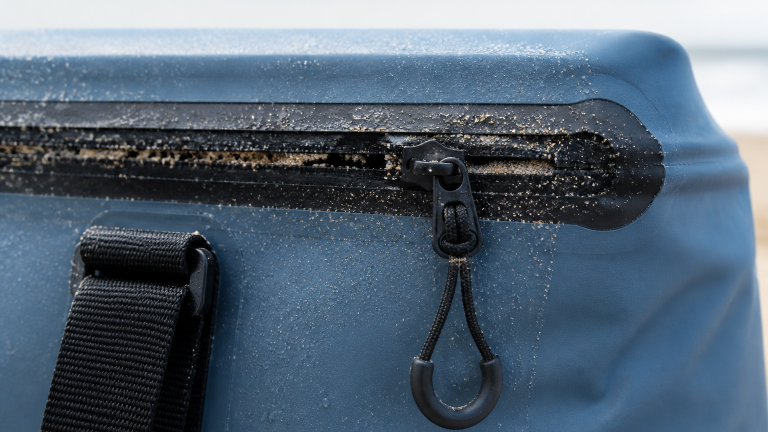
For coastal applications, mitigating sand ingress and water damage is critical. The exterior shell utilizes a 600D Oxford polyester treated with a Polyurethane (PU) coating, creating a hydrophobic surface that sheds liquids and prevents fine silica particles from embedding in the fabric weave. Internally, the food-grade PEVA membrane is assembled using High-Frequency (HF) welding. This melts the polymer seams together without needles, creating an absolute fluid barrier that prevents melted ice from leaking into the vehicle or compromising the foam core. We manufacture these assets to exact volumetric requirements, integrating heavy-duty X-box stitched handles and applying high-fidelity graphics via printed nonwoven bags compatible heat-transfer technologies for retail and promotional scaling.

  • PU-coated 600D Oxford exterior for high sand and water resistance
  • High-Frequency (HF) welded PEVA interior for absolute fluid containment
  • 5mm to 8mm closed-cell EPE foam ensuring 12+ hour thermal stability
  • Rigid base inserts for upright stability on uneven coastal terrain
  • Spun-polyester webbing with reinforced X-box load anchors
  • Isolated dry-storage compartments and expandable side mesh
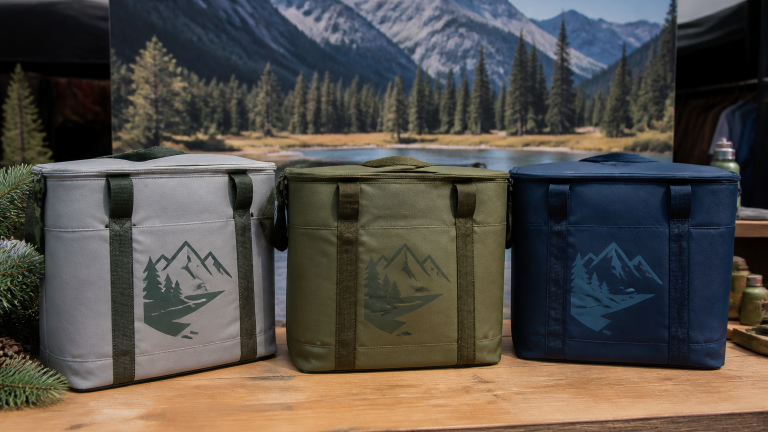
  • Custom volumetric scaling and Pantone-matched corporate branding
  • Manufactured under strict ISO-compliant AQL load-testing protocols

Picnic Cooler Bag Specifications

ComponentEngineering Specification
Exterior Substrate600D/900D Oxford Polyester with PU coating; highly sand and water-resistant
Thermal Core5mm – 8mm High-density closed-cell EPE foam
Interior MembraneFood-grade PEVA or Aluminum foil; High-Frequency (HF) welded seams
Closure SystemNylon coil zippers equipped with anti-dust/sand exterior baffles
Thermal StabilityMaintains internal target temperature for 12+ hours with ice packs
Volumetric CapacityCustomizable from 15L to 40L for multi-person outdoor payloads
Structural BaseRigid PE board insert; flat wide-gusset geometry for upright stability
Load AnchorsSpun-polyester webbing with X-box cross-stitching
CompartmentalizationIsolated dry front pockets; dual side mesh expansion zones
Color ConfigurationFabric dyed to exact corporate Pantone (PMS) specifications
Print TechnologyHigh-adhesion silkscreen or full-color heat transfer lamination
AQL StandardsDynamic drop testing and hydrostatic seam verification prior to export


Picnic Cooler Bag Configurations

High-Capacity Family Picnic Totes

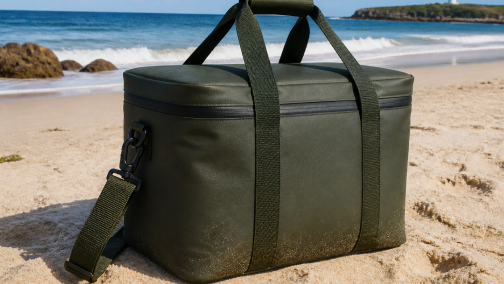
Coastal Beach Cooler Bags

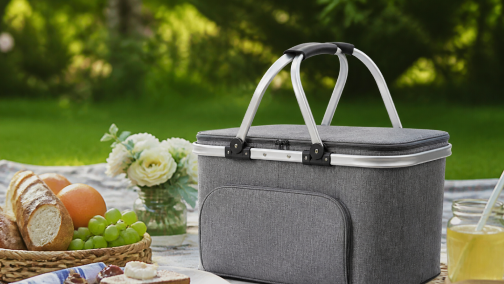
Structured Picnic Basket Coolers

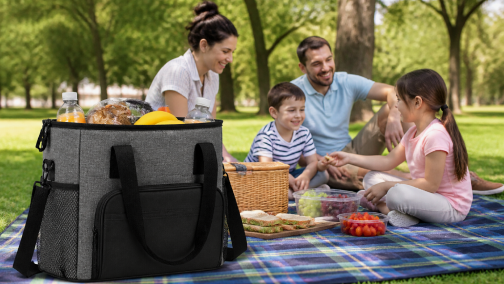
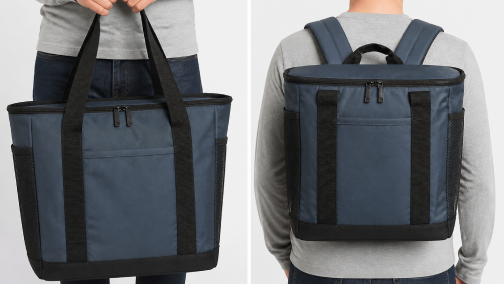
Hybrid Backpack Cooler Totes


Thermodynamic Mass and Retention

Thermal retention in large-capacity coolers relies on the physics of chilled mass. A larger internal volume holding more ice and pre-chilled goods creates a stable microclimate. We utilize 5mm to 8mm closed-cell EPE foam to interrupt conductive heat transfer, ensuring the payload remains below safe temperature thresholds during extended outdoor exposure.


Sand Mitigation and Liquid Containment

Coastal environments introduce fine particulate (sand) and moisture threats. The exterior shell utilizes a PU-coated polyester to shed water and block sand penetration. Internally, the food-grade PEVA lining is assembled using High-Frequency (HF) welding, creating a seamless basin that prevents melted ice from leaking and stops exterior moisture from compromising the insulation core.


Structural Load Capacity and Branding

Large group-sized coolers routinely carry payloads exceeding 10 kilograms. The handle architecture utilizes spun-polyester webbing anchored with X-box cross-stitching, transferring the physical weight away from the top hem. The exterior fabric panels are optimized for corporate branding, accepting precise silk-screen or heat-transfer printing for B2B promotional applications.

Picnic Cooler Projects

logo
logo
logo
logo
logo
logo
logo
logo
logo
logo
logo
logo
logo

About Changyuan Nonwoven

We are a nonwoven fabric and bag manufacturer based in Changzhou, China, running a full production line from raw material to finished goods since 2012. Our factory handles fabric extrusion, 7-color gravure printing, lamination, and bag making in-house, serving clients in 20+ countries with a daily output of 200,000 pieces.

Company factory how we work

FAQs

What determines the thermal retention time of a large picnic cooler bag?

Thermal retention is a function of insulation density and internal chilled mass. We utilize 5mm to 8mm closed-cell EPE foam. When fully loaded with ice and pre-chilled items, this architectural stack effectively interrupts heat conduction, maintaining stable internal temperatures for 12 to 24 hours depending on ambient exposure.

How does the bag prevent melted ice from leaking?

The interior relies on a food-grade PEVA membrane. Rather than using traditional sewing, which creates needle perforations, the PEVA panels are joined using High-Frequency (HF) welding. This process melts the polymer edges into a continuous, 100% leak-proof basin.

What makes a beach cooler bag resistant to sand and coastal environments?

Coastal applications require specific exterior materials. We specify 600D Oxford polyester with a polyurethane (PU) coating. This creates a hydrophobic surface that sheds water and prevents fine sand particles from embedding into the fabric matrix. Sand-proof zipper baffles further seal the internal compartment.

How is the structural integrity maintained when carrying heavy beverage payloads?

To support heavy payloads (often exceeding 10kg), the handle webbing is constructed from high-tensile spun polyester. These straps are anchored to the bag body using X-box cross-stitching, which distributes the sheer stress diagonally across the fabric rather than concentrating it on a single seam line.

Can the exterior fabric support complex corporate logo printing?

Yes. The smooth surface of the coated polyester or heavy-duty nonwoven exterior is engineered for high ink adhesion. We utilize silk-screen printing for solid spot colors and heat-transfer lamination for complex, full-color photographic graphics, matching exact corporate Pantone specifications.

What are the B2B quality control standards before bulk shipment?

We enforce strict Acceptable Quality Limit (AQL) protocols. Pre-shipment testing includes dynamic drop tests with 150% rated payloads to verify handle strength, hydrostatic testing of the welded PEVA lining to ensure zero leakage, and zipper actuation cycling.

B2B Procurement Specifications for Large-Capacity Thermal Totes

Defining the Thermodynamic Volume

Procuring large picnic and beach coolers requires an understanding of thermal mass physics. A group-sized thermal tote holds temperatures significantly longer than a standard insulated lunch bag. This occurs because a larger internal volume, when filled with pre-chilled goods and ice packs, creates a denser thermal core that resists ambient heat fluctuation. To maximize this physical advantage, the insulation specification must dictate 5mm to 8mm high-density EPE foam. Thinner promotional foams (2mm) will fail to arrest conductive heat transfer during a 12-hour exposure in coastal sunlight.

Engineering Sand Mitigation and Fluid Containment

Coastal and outdoor environments introduce specific mechanical threats: fine particulate (sand) ingress and internal fluid leakage from melting ice. The architectural response requires specific material integration:

Engineering FeatureMechanical FunctionOperational Benefit
HF-Welded PEVA LiningEliminates needle perforations on all interior seamsProvides 100% leak-proof fluid containment for loose ice
PU-Coated 600D ShellHydrophobic and abrasion-resistant surface treatmentPrevents water absorption and fine sand embedding
Baffled Zipper SystemsCovers the coil tracks with exterior fabric flapsBlocks grit from destroying the zipper mechanism
Rigid PE Base BoardDistributes vertical load across a flat geometryEnsures the bag stands upright on uneven sand or grass

Load Distribution for Heavy Payloads

A 30-liter cooler filled with beverages and ice frequently exceeds 12 kilograms. Relying on standard straight-line stitching at the top hem will result in immediate structural failure. Industrial specifications mandate that the carry handles utilize high-tensile spun polyester webbing. These straps must be anchored to the main body panels using X-box cross-stitching, which distributes the sheer pulling stress diagonally across the fabric matrix. For maximum durability, the webbing should extend continuously beneath the bottom gusset to cradle the payload.

Pre-Production Verification Protocols

  • Verify that the PEVA interior is exclusively High-Frequency welded; sewn interior seams are unacceptable for ice retention.
  • Confirm the exterior substrate features a PU (Polyurethane) coating for critical liquid shedding.
  • Mandate dynamic drop testing during the QA phase, loading the prototype with 150% of the target payload weight to validate handle anchor strength.
  • Ensure corporate artwork files are optimized for the specified printing method (silkscreen for spot colors, heat transfer for CMYK gradients).

By standardizing these technical parameters, retail buyers and promotional agencies guarantee a high-performance outdoor asset. Contact our packaging engineering team to define your volumetric requirements and initiate custom physical prototyping for your seasonal rollout.